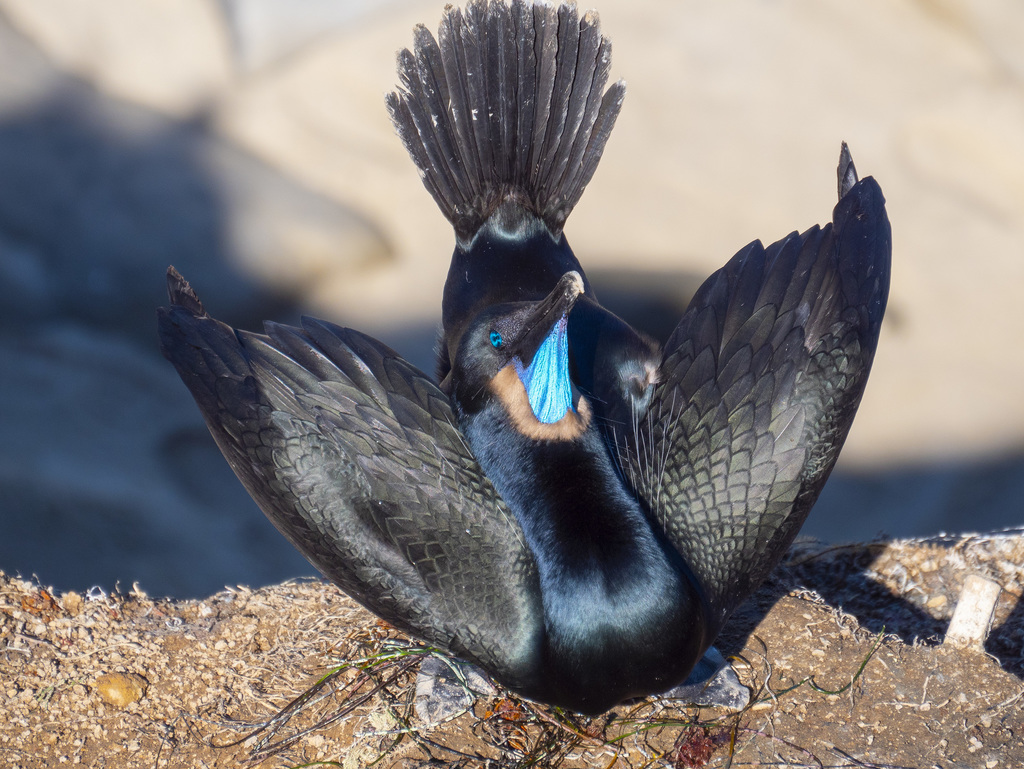
Brandt's Cormorant
Urile penicillatus
Also known as: Brown Cormorant, Pencilled Cormorant, Townsend's Cormorant, Tufted Cormorant
About This Species
Look for dense colonies on offshore rocks and cliffs along the Pacific coast, where breeding adults show a striking blue throat patch and pale plumes during the nesting season. Away from colonies, birds are usually seen diving from the surface in nearshore waters, sometimes in large rafts. Breeding season, roughly spring into summer, is when colonies are most active and easiest to view from a respectful distance, such as a headland or boat.
Ethical Viewing Guidelines
- View colonies from established overlooks or boats rather than landing on or approaching breeding rocks, since flushed adults leave eggs and chicks exposed to gulls and weather.
- Seabird colonies are frequently protected under coastal wildlife regulations, marine protected area rules, or migratory bird statutes depending on the country, and unauthorized landing on breeding islands is often restricted or prohibited.
- When boating nearby, keep engine noise and approach speed low and never circle a colony repeatedly.
LCAvesSuliformesPhalacrocoracidae
Seasonal Activity
539,542 sightings · 2000–2026
Citizen science records via GBIF
All monthsThis month
Classification
- Kingdom
- Animalia
- Phylum
- Chordata
- Class
- Aves
- Order
- Suliformes
- Family
- Phalacrocoracidae
Photo
(c) uzun, some rights reserved (CC BY-NC), uploaded by uzun
CC-BY-NC-4.0
Occurrence data from GBIF.