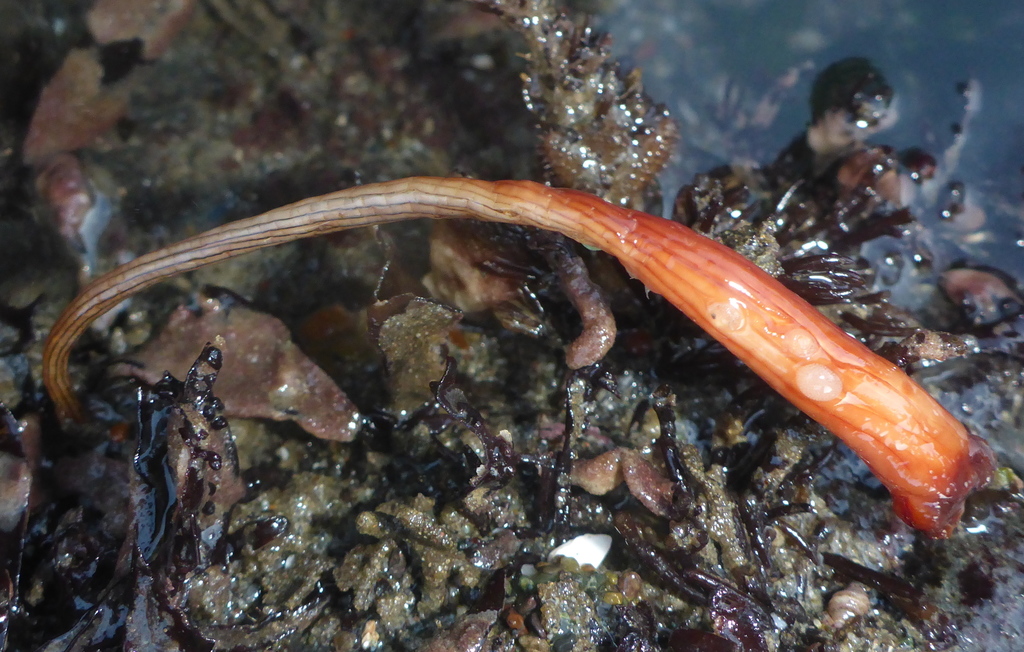
Long-Stalked Sea Squirt
Styela montereyensis
Also known as: Monterey Stalked Tunicate, Stalked Tunicate
About This Species
Look for this tall, stalked tunicate attached to rocks, pilings and floating docks in intertidal and shallow subtidal zones along the Pacific coast of North America, where its long, wrinkled, club-shaped body sways gently with the current. It is a filter feeder and stays fixed in place, so viewing is a matter of finding exposed rock or dock structure at low tide or while snorkelling or diving. Low tide on a rocky shore or a calm dive in a harbour are the most reliable ways to see it.
Ethical Viewing Guidelines
- Because this species is sessile and attached to a substrate, the main disturbance risk is from handling, prying it loose or damaging the surface it grows on, so look without touching or collecting it.
- Regulations on collecting intertidal invertebrates vary by state, marine protected area and country along the Pacific coast, so check local rules before removing anything from a tide pool or dock.
- Take care with footing on rocks it and similar species grow on, both for your safety and to avoid crushing marine life.
NEAscidiaceaStolidobranchiaStyelidae
Seasonal Activity
231,471 sightings · 2001–2026
Citizen science records via GBIF
All monthsThis month
Classification
- Kingdom
- Animalia
- Phylum
- Chordata
- Class
- Ascidiacea
- Order
- Stolidobranchia
- Family
- Styelidae
Photo
(c) Alison Young, some rights reserved (CC BY-NC), uploaded by Alison Young
CC-BY-NC-4.0
Occurrence data from GBIF.