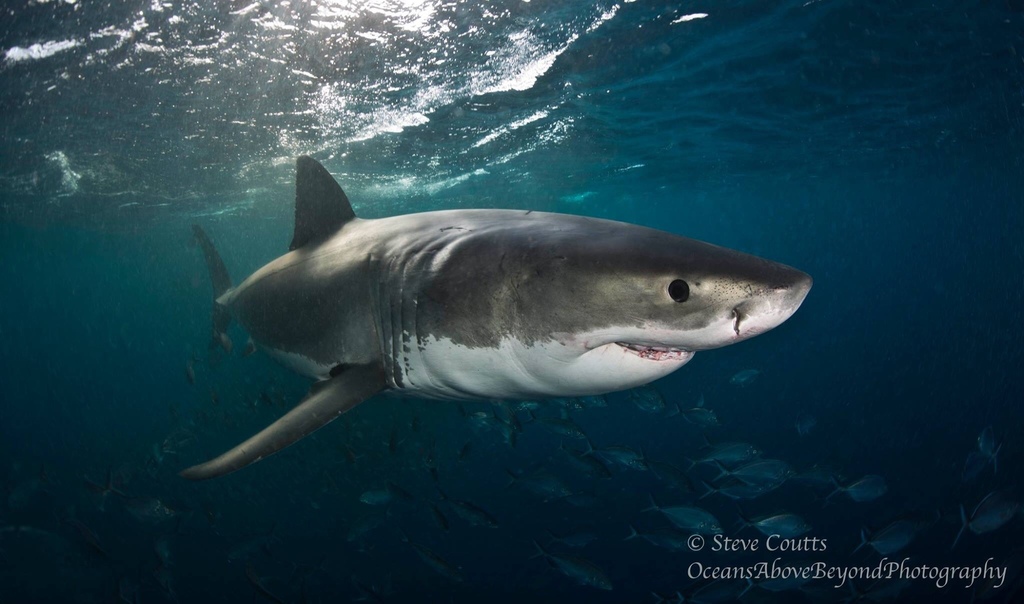
Great White Shark
Carcharodon carcharias
Also known as: White Shark, Anchovy-Eater, Man-Eater Shark, Tommy, White Pointer
About This Species
Most reliably encountered on chartered boat or cage-diving trips at known coastal aggregation sites near seal colonies, such as South Africa's Western Cape, South Australia's Neptune Islands, Mexico's Guadalupe Island, and central California, usually during the cooler months when seasonal aggregations peak. Look for a slow, cruising dorsal fin near the surface, a torpedo-shaped grey-and-white body, and interest in baited lines or natural prey such as seals and sea lions rather than swimmers. Water clarity and timing vary hugely by site, so local operators and their sightings logs are the best guide to planning a trip.
Ethical Viewing Guidelines
- This species is legally protected across much of its range, including South Africa, Australia, the United States, New Zealand and parts of the Mediterranean, where killing, capturing or deliberately disturbing an individual is a criminal offense; protections and permitted activities differ by jurisdiction, so check current local and national rules before any encounter.
- Close encounters should happen only through licensed cage-diving or chum-based tour operators who follow local codes of conduct on chum use, vessel distance and minimizing feeding-related behavior change, rather than through independent free-diving, spearfishing or baiting.
- Keep well clear of any individual that seems agitated, never touch or corner one, and give way at all times, since most incidents follow from people approaching too closely rather than the animal initiating contact.
Seasonal Activity
13,764 sightings · 2000–2026
Citizen science records via GBIF
Classification
- Kingdom
- Animalia
- Phylum
- Chordata
- Class
- Elasmobranchii
- Order
- Lamniformes
- Family
- Lamnidae
Photo
(c) stephencoutts, some rights reserved (CC BY-NC)
CC-BY-NC-4.0
Occurrence data from GBIF.