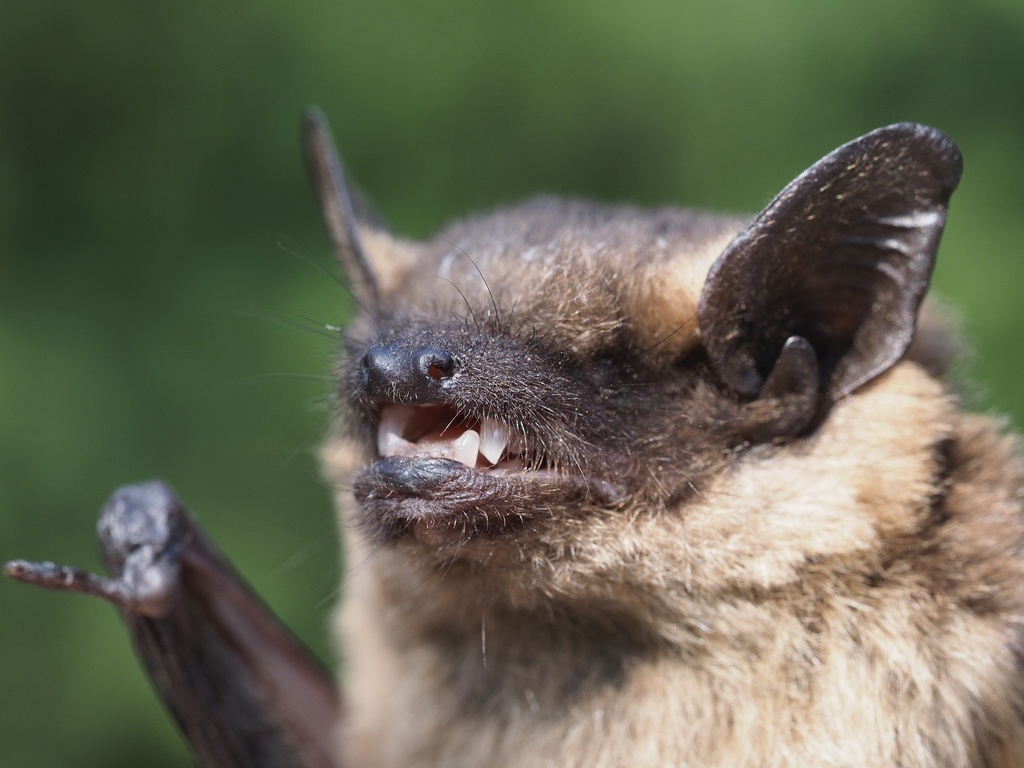
Serotine
Eptesicus serotinus
Also known as: Common Serotine, Serotine Bat, Big Brown Bat, Eurasian Serotine, Silky Bat
Habitat
Aerial
Diet
Invertebrate
Active Time
Nocturnal
Size
23 g
About This Species
One of Europe's larger bats, emerging fairly late at dusk to hawk for moths and beetles in slow, level flight over parkland, hedgerows and gardens, often at treetop height along a regular commuting route. Roosts are typically in buildings rather than trees, tucked into roof spaces or behind cladding, so a hand-held bat detector tuned around 25–27 kHz near a known roost exit at dusk in summer is the most practical way to see one.
Ethical Viewing Guidelines
- All bat species and their roosts are legally protected across most of their European range, including in the UK, so a roost must never be disturbed, and torches or detectors should be used from a distance rather than shone directly at an entrance.
- If a roost is found in or near a building, contact a local bat conservation group before any building work, since disturbing or damaging a roost can be a criminal offence.
Seasonal Activity
153,572 sightings · 2000–2026
Citizen science records via GBIF
Classification
- Kingdom
- Animalia
- Phylum
- Chordata
- Class
- Mammalia
- Order
- Chiroptera
- Family
- Vespertilionidae
Traits
- Diet
- Invertebrate
- Foraging
- Aerial
- Activity
- Nocturnal
- Body mass
- 23 g
Photo
(c) Jakob Fahr, some rights reserved (CC BY-NC), uploaded by Jakob Fahr
CC-BY-NC-4.0
Occurrence data from GBIF.