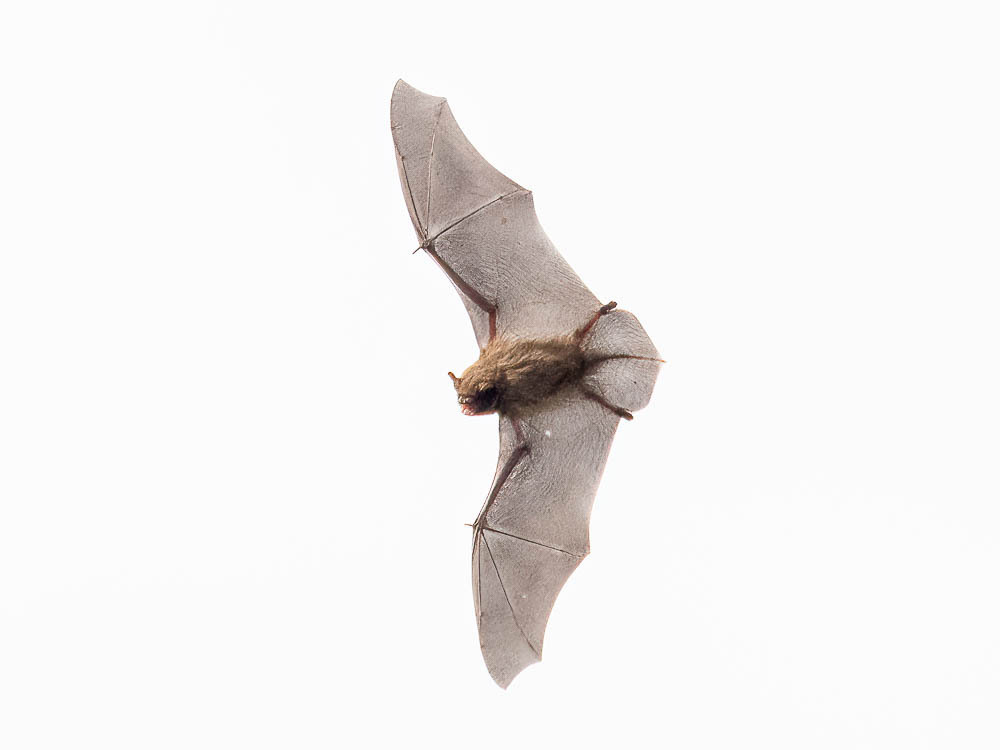
Daubenton's Bat
Myotis daubentonii
Also known as: Daubenton's Myotis, Daubentons Bat, Water Bat
Habitat
Aerial
Diet
Invertebrate
Active Time
Nocturnal
Size
8 g
About This Species
Hunts low over still or slow-moving water such as canals, rivers and lakes across Europe and temperate Asia, skimming the surface for emerging insects, and can be picked out at dusk by its fast, fluttering flight just centimetres above the water. It is almost entirely nocturnal, so the best views come at twilight in summer near water with overhanging trees, ideally with a bat detector tuned to its high-frequency calls. It roosts in tree hollows, bridges and bat boxes close to its foraging waterways.
Ethical Viewing Guidelines
- Watch from the bank rather than approaching roost sites, and never touch or handle a bat, including grounded ones, both because bats can carry rabies-related viruses and because bats and their roosts are legally protected across much of Europe, making disturbance or roost destruction an offence.
- Exact protections and penalties vary by country, so if a roost is found in a building, contact a local bat conservation group rather than intervening directly.
Seasonal Activity
220,870 sightings · 2000–2026
Citizen science records via GBIF
Classification
- Kingdom
- Animalia
- Phylum
- Chordata
- Class
- Mammalia
- Order
- Chiroptera
- Family
- Vespertilionidae
Traits
- Diet
- Invertebrate
- Foraging
- Aerial
- Activity
- Nocturnal
- Body mass
- 8 g
Photo
no rights reserved
CC0-1.0
Occurrence data from GBIF.