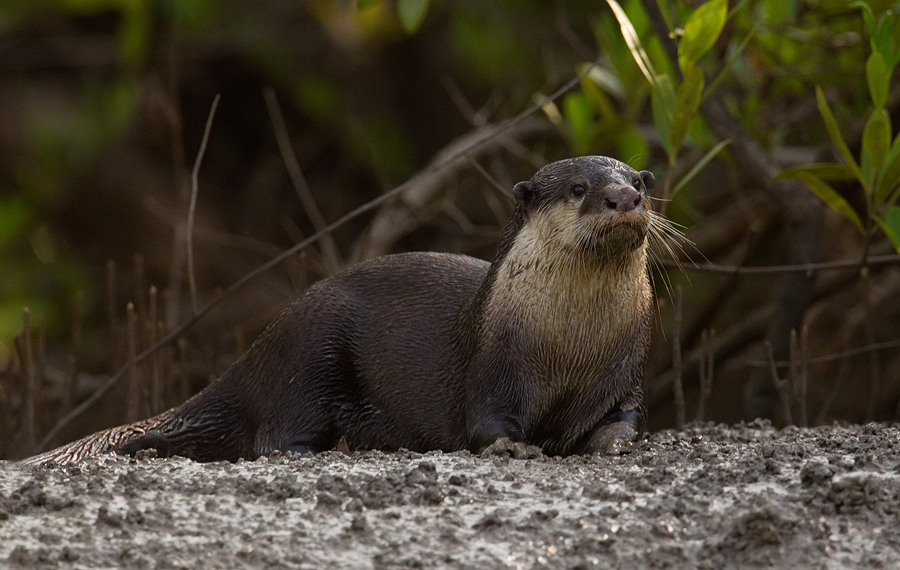
African Clawless Otter
Aonyx capensis
Also known as: Cape Clawless Otter, African Small-Clawed Otter, Swamp Otter, Congo Clawless Otter, African or Cape Clawless Otter
Habitat
Ground
Diet
Invertebrate
Active Time
Nocturnal
Size
19.0 kg
About This Species
Found along rivers, estuaries, and rocky coastlines, this semi-aquatic carnivore spends daylight hours resting in bankside holts or dense riparian vegetation, becoming most active around dusk and dawn when it forages along the water's edge using its dexterous, unwebbed forepaws to probe crevices for crabs, frogs, and fish. Listen for high-pitched whistles and chirping contact calls between family members, and watch for the characteristic humped silhouette moving with a bounding gait along exposed mudflats or rocky shores, as well as spraints and crab shell middens that betray regularly used feeding sites. The best sightings come during the cooler dry season when vegetation is low and water levels drop, concentrating prey and making animals easier to spot; target the hour before sunset along quiet, undisturbed stretches of permanent water where human foot traffic is minimal.
Ethical Viewing Guidelines
- Maintain a distance of at least 20–30 metres and use natural cover or a fixed observation point to avoid triggering flight responses, particularly near holts, foraging sites, or females with young.
- Across its range, this species receives protection under national wildlife legislation in countries including South Africa (National Environmental Management: Biodiversity Act), Kenya (Wildlife Conservation and Management Act), and Cameroon, so handling, capture, or deliberate disturbance is generally prohibited without a permit.
- Keep noise to a minimum, avoid flash photography, and never block access to water or retreat routes, as stress-induced displacement can disrupt foraging and breeding behaviour.
Seasonal Activity
1,044 sightings · 2000–2026
Citizen science records via GBIF
Classification
- Kingdom
- Animalia
- Phylum
- Chordata
- Class
- Mammalia
- Order
- Carnivora
- Family
- Mustelidae
Traits
- Diet
- Invertebrate
- Foraging
- Ground
- Activity
- Nocturnal
- Body mass
- 19.0 kg
Photo
(c) Paul Cools, some rights reserved (CC BY-NC), uploaded by Paul Cools
CC-BY-NC-4.0
Occurrence data from GBIF.