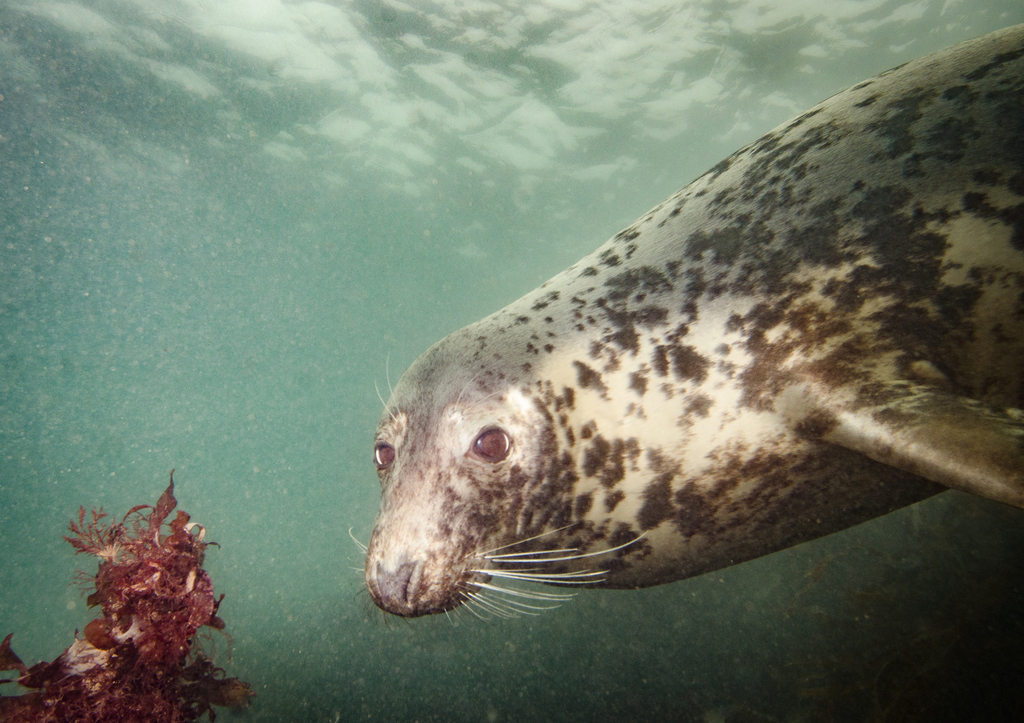
Grey Seal
Halichoerus grypus
Also known as: Gray Seal, Atlantic Seal, Horsehead, Atlantic Gray Seal, Baltic Gray Seal
Habitat
Aquatic
Diet
VertFishScav
Active Time
Diurnal
Size
157.7 kg
About This Species
Look for haul-outs on rocky islets, sandbanks and undisturbed beaches, where animals bask in loose groups by day and slip into the water to forage on fish and squid. Autumn brings the best spectacle at traditional pupping colonies, when white-coated pups lie on open sand while adults come and go through the surf. Calm, sunny days improve visibility both onshore and for boat trips, since the animals haul out in greater numbers when the weather is settled.
Ethical Viewing Guidelines
- Keep at least 100 metres from haul-outs and pupping colonies, staying low-profile and quiet rather than approaching directly, since a seal that lifts its head repeatedly or moves toward the water is already disturbed.
- Coastal protection law differs across its North Atlantic range, with some countries designating specific colonies as protected sites with legal exclusion zones during the pupping season, so check local guidance before visiting a known colony.
- A mother that abandons a pup due to disturbance will not usually return, making distance the single most important precaution.
Seasonal Activity
331,630 sightings · 2000–2026
Citizen science records via GBIF
Classification
- Kingdom
- Animalia
- Phylum
- Chordata
- Class
- Mammalia
- Order
- Carnivora
- Family
- Phocidae
Traits
- Diet
- VertFishScav
- Foraging
- Aquatic
- Activity
- Diurnal
- Body mass
- 157.7 kg
Photo
(c) Keith DP Wilson, some rights reserved (CC BY-NC)
CC-BY-NC-4.0
Occurrence data from GBIF.