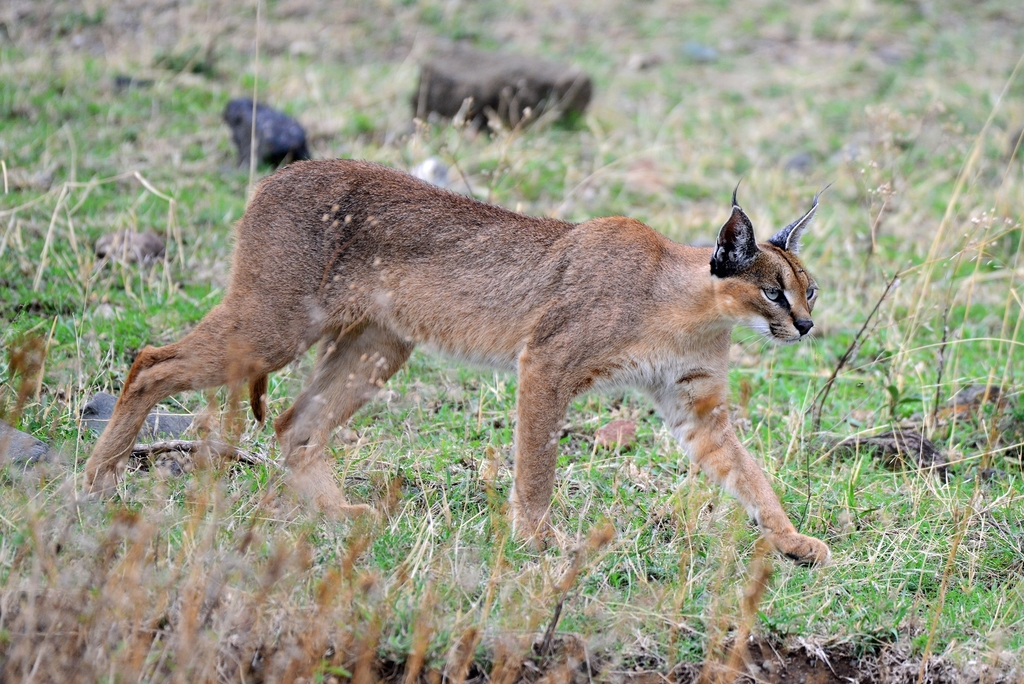
Caracal
Caracal caracal
Also known as: African Caracal, Asian Caracal, Caracal Lynx, Desert Lynx, Red Lynx
Habitat
Ground
Diet
VertFishScav
Active Time
Nocturnal
Size
13.7 kg
About This Species
A solitary and elusive medium-sized cat, it favors dry savannas, scrublands, and rocky hillsides where dense cover provides ambush opportunities, hunting everything from rodents to small antelope with remarkable leaping ability. At dawn and dusk — its most active transitional periods — watch for a swift, tawny silhouette moving low through tall grass, and listen for the sharp, dog-like bark it occasionally emits, particularly during the breeding season. Dry season months offer the best chances, when thinning vegetation opens sightlines and prey concentrates around water sources, drawing it into more predictable corridors.
Ethical Viewing Guidelines
- Maintain a minimum distance of 50–100 metres and use binoculars or a telephoto lens to observe without encroaching on the animal's space, retreating immediately if it shows signs of awareness or stress.
- Across its range, it receives varying legal protections — it is fully protected in many African nations under national wildlife acts and listed on CITES Appendix II, restricting international trade, so always verify local regulations before entering known habitat areas.
- Keep noise to a minimum, avoid blocking movement corridors, never attempt to attract it with calls or food, and limit observation time to reduce cumulative pressure on individuals that may be resting, hunting, or raising young.
Seasonal Activity
1,810 sightings · 2000–2026
Citizen science records via GBIF
Classification
- Kingdom
- Animalia
- Phylum
- Chordata
- Class
- Mammalia
- Order
- Carnivora
- Family
- Felidae
Traits
- Diet
- VertFishScav
- Foraging
- Ground
- Activity
- Nocturnal
- Body mass
- 13.7 kg
Photo
(c) mikeloomis, some rights reserved (CC BY-NC), uploaded by mikeloomis
CC-BY-NC-4.0
Occurrence data from GBIF.