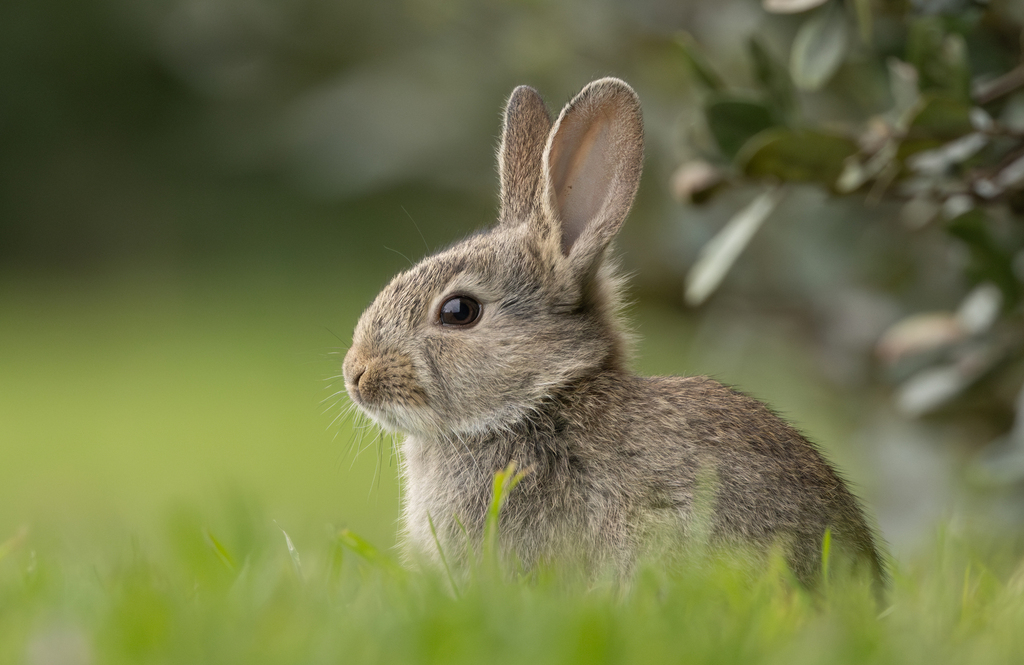
European Rabbit
Oryctolagus cuniculus
Also known as: Wild Rabbit, Rabbit, Domestic Rabbit, Conejo Europeo, Coney
Habitat
Ground
Diet
PlantSeed
Active Time
Nocturnal
Size
1.8 kg
About This Species
Found in loose colonies on open grassland, farmland edges, and scrubby heathland where sandy or chalky soils allow easy burrowing, these lagomorphs are most active in the low-light hours around dawn and dusk despite being broadly nocturnal, making early mornings the most reliable window for observation. Watch for the characteristic white flash of the scut as individuals bolt for cover, listen for the rapid foot-thumping alarm signal that ripples through a group when danger is sensed, and scan field margins and south-facing embankments near obvious warren entrances marked by bare, excavated earth and scattered droppings. Late spring through summer offers the best viewing, when warmer evenings encourage prolonged grazing sessions above ground and the presence of small leverets — seen tumbling clumsily at warren entrances — makes colonies noticeably more active and conspicuous.
Ethical Viewing Guidelines
- Given their Endangered status, maintain a minimum distance of 30–40 metres and use binoculars or a long lens rather than approaching closer, retreating immediately if individuals freeze, thump, or move toward a burrow entrance.
- Across their native and introduced range, they receive varying legal protections — notably under Spain's national biodiversity legislation and regional laws given their critical role as prey for threatened Iberian predators, while in the UK the Wild Mammals (Protection) Act 1996 and local conservation designations may apply — so always check site-specific regulations before visiting known colonies.
- Observe from existing paths or hides during early morning or evening activity periods, avoid lingering near warren entrances, and never bring dogs into areas where populations are already under pressure from disease or habitat loss.
Seasonal Activity
578,992 sightings · 2000–2026
Citizen science records via GBIF
Classification
- Kingdom
- Animalia
- Phylum
- Chordata
- Class
- Mammalia
- Order
- Lagomorpha
- Family
- Leporidae
Traits
- Diet
- PlantSeed
- Foraging
- Ground
- Activity
- Nocturnal
- Body mass
- 1.8 kg
- Home range
- 4 ha
Photo
(c) Caiden B, some rights reserved (CC BY-NC), uploaded by Caiden B
CC-BY-NC-4.0
Occurrence data from GBIF.