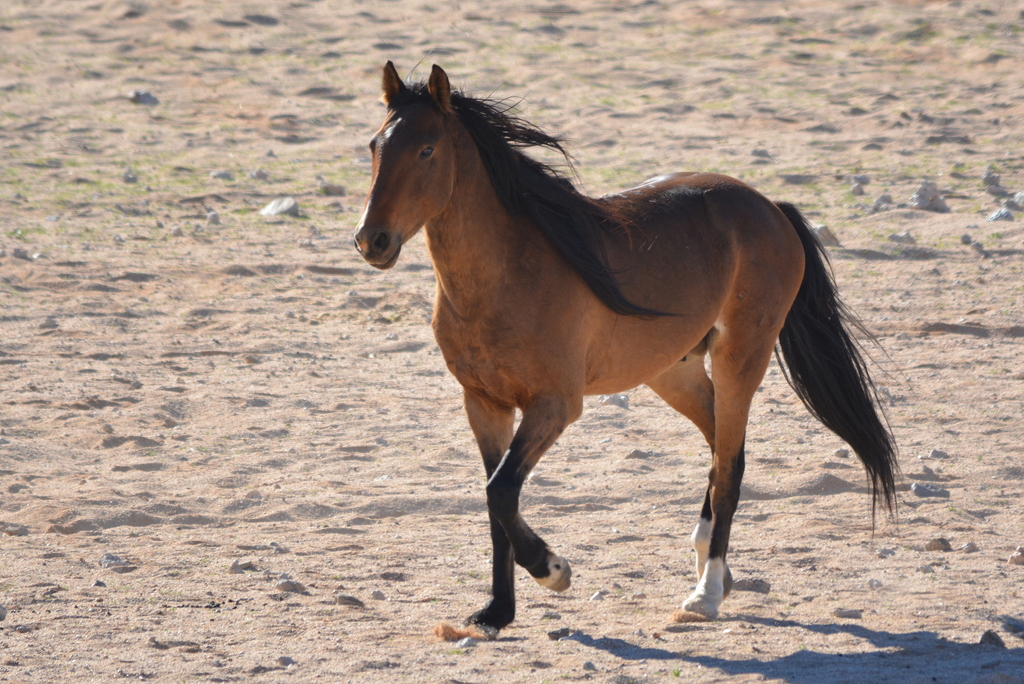
Horse
Equus caballus
Also known as: Feral Horse, Domestic Horse
Habitat
Ground
Diet
PlantSeed
Active Time
Diurnal
Size
250.0 kg
About This Species
Predominantly active after dark, these large perissodactyls are most easily located in open grasslands, pastures, and semi-arid plains where they graze in loose groups, moving steadily across the ground layer in search of forage. Listen for rhythmic hoof-falls, soft whinnying, and the tearing sound of grass being cropped close to the soil, and watch for the silhouette of an upright head scanning for disturbance between feeding bouts. Viewing is most rewarding on clear nights with good moonlight or at dusk and dawn when animals transition between rest and grazing, with late spring and summer offering the advantage of longer twilight periods and peak forage availability that keeps groups concentrated in predictable feeding areas.
Seasonal Activity
81,705 sightings · 2000–2026
Citizen science records via GBIF
Classification
- Kingdom
- Animalia
- Phylum
- Chordata
- Class
- Mammalia
- Order
- Perissodactyla
- Family
- Equidae
Traits
- Diet
- PlantSeed
- Foraging
- Ground
- Activity
- Diurnal
- Body mass
- 250.0 kg
- Home range
- 15.6 km²
Photo
(c) copper, some rights reserved (CC BY-NC), uploaded by copper
CC-BY-NC-4.0
Occurrence data from GBIF.