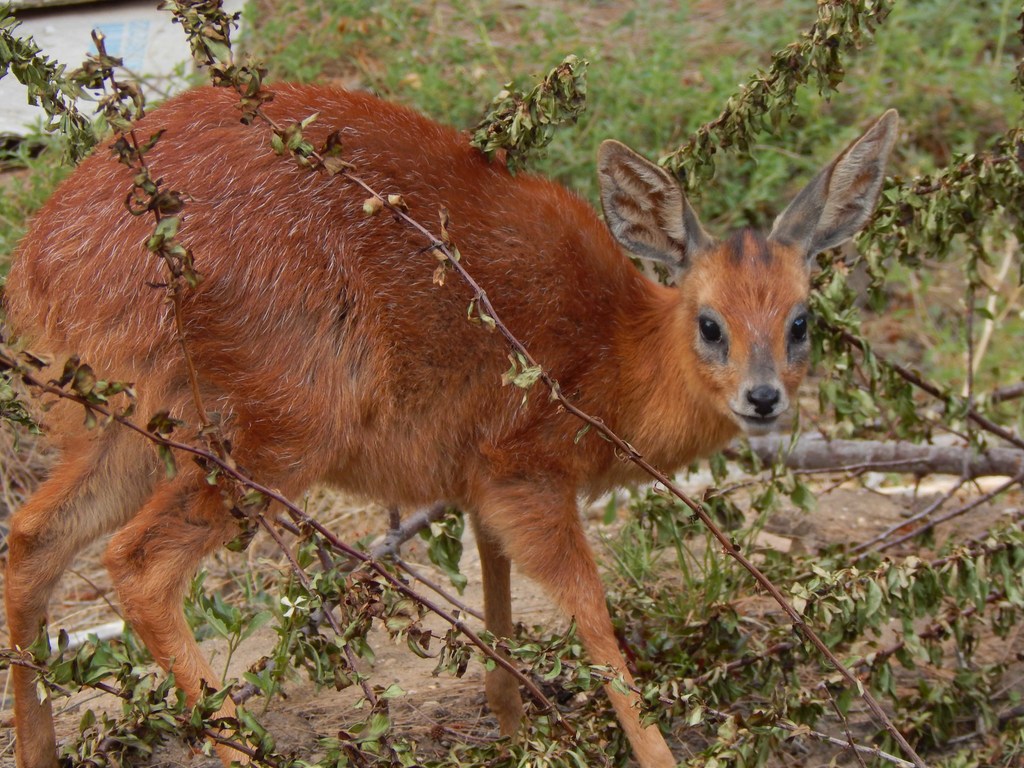
Cape Grysbok
Raphicerus melanotis
Also known as: Southern Grysbok
Habitat
Ground
Diet
PlantSeed
Active Time
Diurnal
Size
10.2 kg
About This Species
Found singly or in loosely bonded pairs within dense fynbos, coastal thicket, and scrubby hillside vegetation, this small antelope browses low shrubs and forbs with a characteristic crouched, head-down posture that makes it easy to overlook against the undergrowth. Watch for the russet-brown coat flecked with white hairs, the short upright horns of the ram, and the large, rounded ears that swivel independently — a rustling retreat into thick scrub or a brief freezing stance before bolting are your most reliable first cues. Early morning and late afternoon during the cooler months of autumn and winter offer the best sightings, when individuals move more boldly along thicket margins and dirt tracks in the Western Cape lowlands.
Ethical Viewing Guidelines
- Maintain a minimum distance of 20–30 metres and use binoculars or a telephoto lens to observe without encroaching on the animal's comfort zone, retreating immediately if it shows signs of alertness or stress such as raised head, stamping, or movement away from you.
- In South Africa, this species is protected under the National Environmental Management: Biodiversity Act (NEMBA) and provincial nature conservation ordinances, while populations in the Western Cape fall under additional provincial legislation, so always confirm land access permissions and adhere to reserve-specific regulations.
- Keep noise to a minimum, avoid sudden movements, never attempt to approach on foot through dense fynbos habitat where the animal may feel cornered, and resist any temptation to use playback calls or food to draw it closer.
Seasonal Activity
1,310 sightings · 2004–2026
Citizen science records via GBIF
Classification
- Kingdom
- Animalia
- Phylum
- Chordata
- Class
- Mammalia
- Order
- Artiodactyla
- Family
- Bovidae
Traits
- Diet
- PlantSeed
- Foraging
- Ground
- Activity
- Diurnal
- Body mass
- 10.2 kg
Photo
(c) melda, some rights reserved (CC BY-NC), uploaded by melda
CC-BY-NC-4.0
Occurrence data from GBIF.