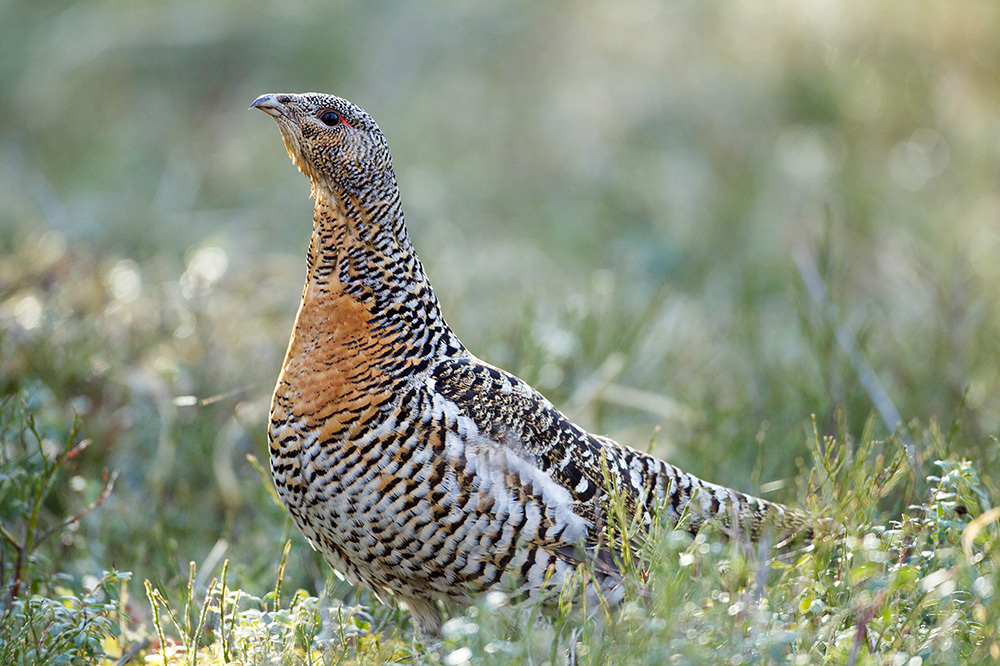
Western Capercaillie
Tetrao urogallus
Also known as: Capercaillie
Habitat
Ground
Diet
PlantSeed
Active Time
Diurnal
Size
2.7 kg
About This Species
A very large grouse of mature boreal and montane pine forest across parts of Europe and Scandinavia, where males gather at traditional display sites, or leks, in early spring to perform an elaborate song-and-display routine to attract females. Outside the breeding season it is a shy, well-camouflaged bird of the forest floor and lower branches, feeding on pine needles, buds, berries and shoots. Established lek sites at dawn in early spring offer the best chance of watching male display, though many are actively protected and require permission or a licensed guide to visit.
Ethical Viewing Guidelines
- This species is highly sensitive to disturbance at lek sites, and even a single close approach during display can cause males to abandon a lek for the season, so viewing should only be done from a distance, from a hide, or with a licensed guide who knows the site.
- In the UK it is listed on Schedule 1 of the Wildlife and Countryside Act, making it an offence to intentionally disturb it at or near an active lek or nest; comparable protections apply in other parts of its European range.
- Given its declining populations in several countries, any viewing should prioritise the bird's welfare over getting closer views.
Seasonal Activity
171,048 sightings · 2000–2026
Citizen science records via GBIF
Classification
- Kingdom
- Animalia
- Phylum
- Chordata
- Class
- Aves
- Order
- Galliformes
- Family
- Phasianidae
Traits
- Diet
- PlantSeed
- Foraging
- Ground
- Activity
- Diurnal
- Body mass
- 2.7 kg
Photo
(c) Tatyana Zarubo, some rights reserved (CC BY-NC), uploaded by Tatyana Zarubo
CC-BY-NC-4.0
Occurrence data from GBIF.