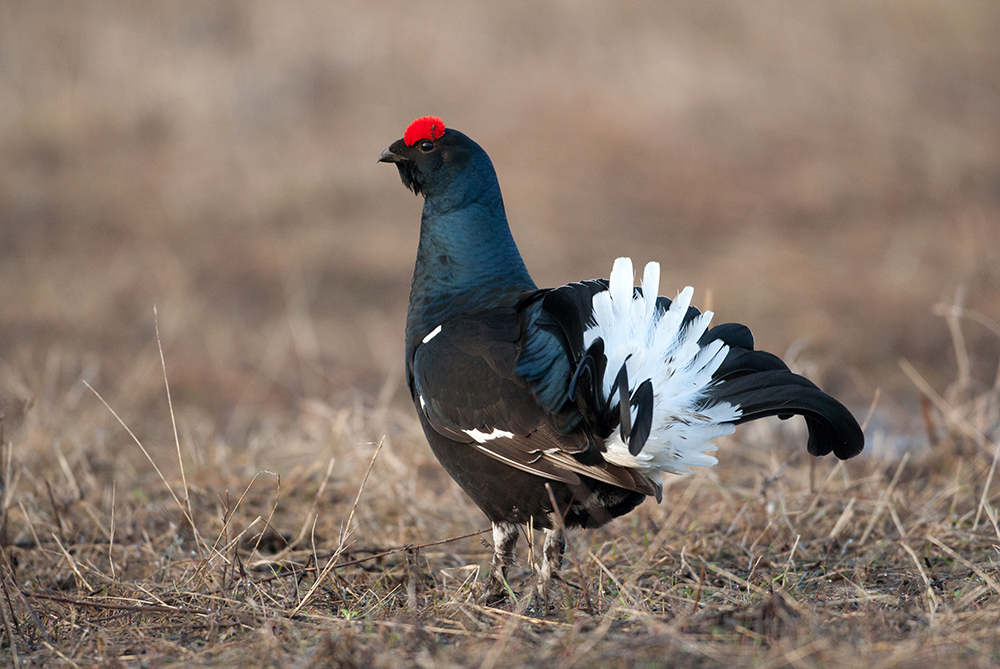
Black Grouse
Lyrurus tetrix
Also known as: Eurasian Black Grouse
About This Species
Black Grouse are best known for the spectacular dawn lek, when males gather on open moorland or forest-edge clearings in early spring to display with fanned tails, inflated white undertail feathers and bubbling, hissing calls to compete for mates. Outside the display season they are quieter and more secretive, favouring a mix of heather moor, birch scrub and rough grassland across upland Europe and parts of Asia. April and May, arriving well before first light, gives the best chance of witnessing lekking behaviour.
Ethical Viewing Guidelines
- Lek sites are highly sensitive to disturbance, and even a distant, quiet observer can cause displaying males to scatter, so use a hide or vehicle as a screen and stay a substantial distance away rather than walking into open ground near a lek.
- Because populations have declined sharply in parts of their range, several European countries afford leks specific legal protection during the breeding season, though the exact rules differ by jurisdiction, so check local guidance before visiting a known site.
- Never approach on foot across open moorland during the lekking hours around dawn.
LCAvesGalliformesPhasianidae
Seasonal Activity
262,630 sightings · 2000–2026
Citizen science records via GBIF
All monthsThis month
Classification
- Kingdom
- Animalia
- Phylum
- Chordata
- Class
- Aves
- Order
- Galliformes
- Family
- Phasianidae
Photo
(c) Tatyana Zarubo, some rights reserved (CC BY-NC), uploaded by Tatyana Zarubo
CC-BY-NC-4.0
Occurrence data from GBIF.