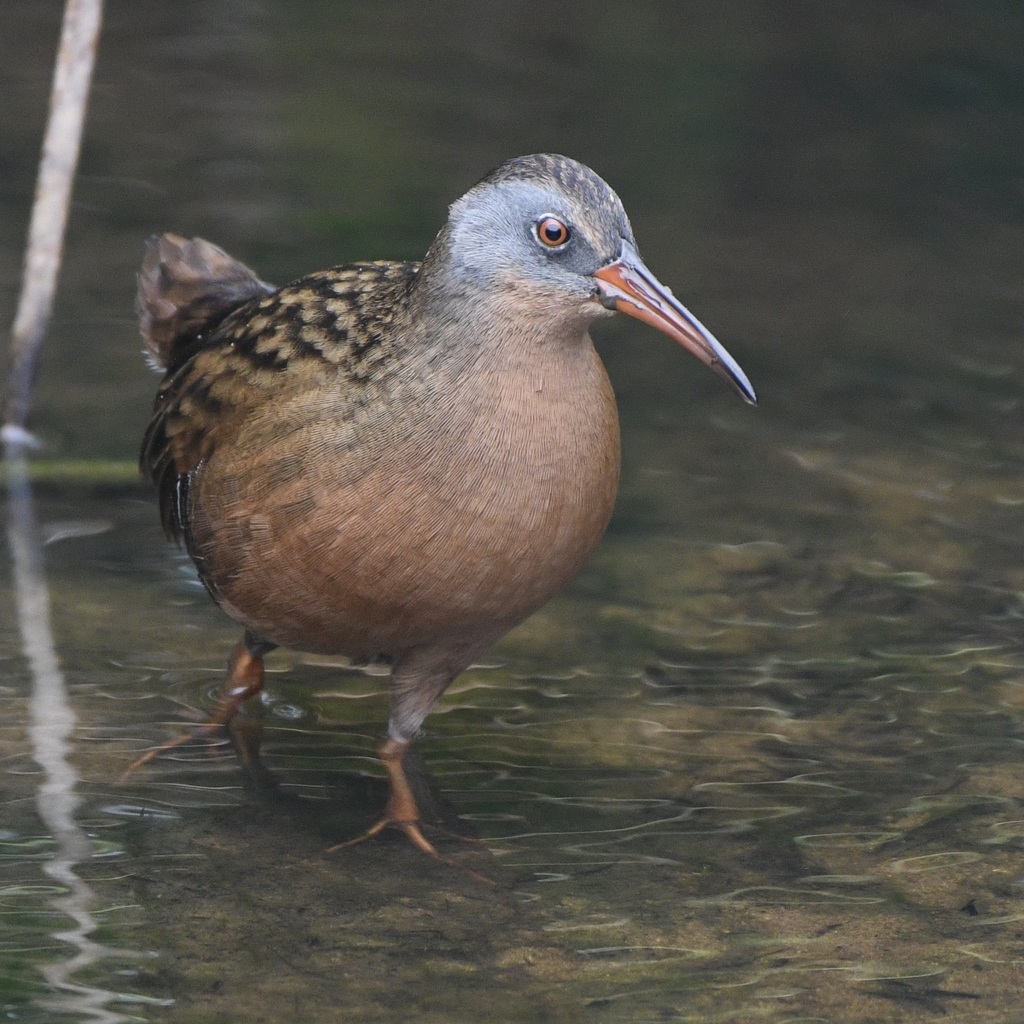
Virginia Rail
Rallus limicola
Also known as: Lesser Rail
About This Species
Listen more than look for this secretive marsh bird, which favours dense freshwater and brackish marshes with cattails and sedges across North America and gives a distinctive descending, grunting call most often at dawn, dusk or after dark. Its narrow body lets it slip through thick vegetation largely unseen, so patient watching at the edge of a reedbed, or a boardwalk that gives a view into open channels, offers the best chance of a sighting. Spring, when males call frequently to establish territories, is the most reliable time to detect it even where it cannot be seen.
Ethical Viewing Guidelines
- Stay on trails or boardwalks at the marsh edge rather than wading into reedbeds, since this species relies on dense cover it will not readily leave and pushing into its habitat causes far more disturbance than it does for open-country birds.
- Native migratory birds and their nests are protected under federal law in the United States and Canada, and wetland habitat itself is often subject to separate protections, so disturbing marsh vegetation to search for a nest should be avoided.
- A quiet, stationary wait near likely habitat is more effective and less disruptive than active searching through the reeds.
Seasonal Activity
647,453 sightings · 2000–2026
Citizen science records via GBIF
Classification
- Kingdom
- Animalia
- Phylum
- Chordata
- Class
- Aves
- Order
- Gruiformes
- Family
- Rallidae
Photo
(c) Anne C. Collins, some rights reserved (CC BY-NC), uploaded by Anne C. Collins
CC-BY-NC-4.0
Occurrence data from GBIF.