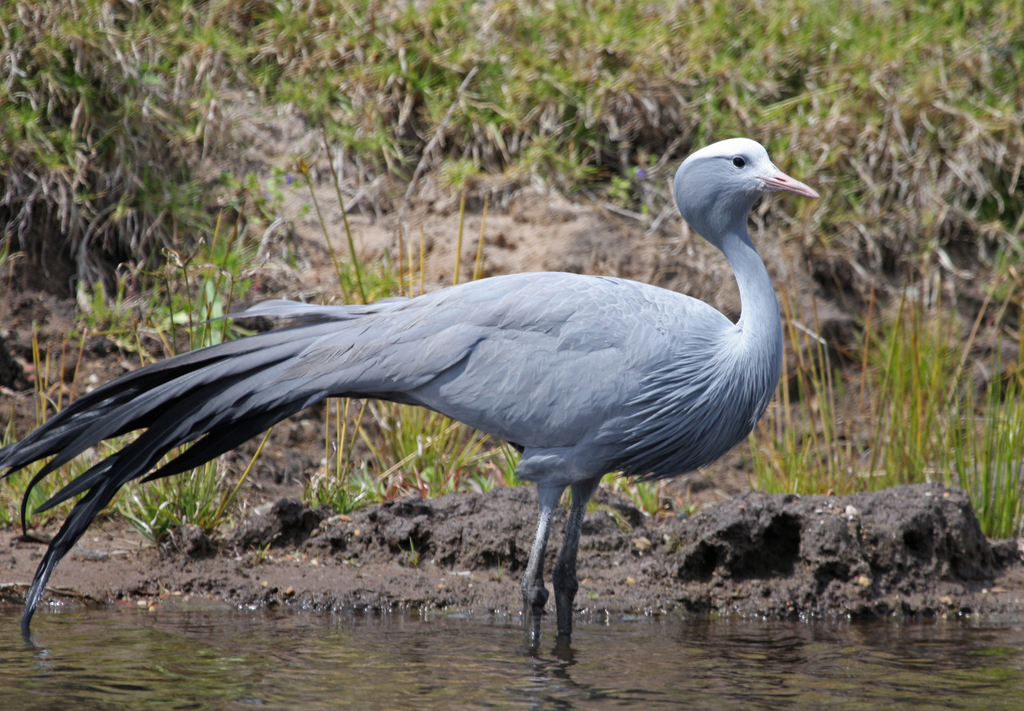
Blue Crane
Anthropoides paradiseus
Also known as: Stanley Crane
About This Species
Found predominantly in open grasslands, grainfields, and wet meadows of South Africa's interior plateaus and the Western Cape, this tall, pale blue-grey crane spends much of its day walking slowly through low vegetation in search of seeds, insects, and small reptiles. Watch for the distinctive trailing black wingtip feathers that brush the ground, giving the impression of a longer tail, and listen for the loud, rattling, bugle-like call — a harsh, nasal kranking that carries far across open terrain. The best viewing opportunities come during the dry winter months when grass is short and flocks gather on harvested wheat and canola fields in the Swartland and Overberg regions, making birds conspicuous and relatively approachable from roadsides.
Ethical Viewing Guidelines
- Maintain a minimum distance of 100 metres at all times, using binoculars or a telephoto lens rather than approaching closer, and increase this distance significantly during the breeding season (August–March in southern Africa) when adults are highly sensitive to disturbance near nests.
- In South Africa, where the vast majority of the global population resides, this species receives full legal protection under the National Environmental Management: Biodiversity Act (NEMBA) and is listed as Vulnerable under the Threatened or Protected Species (TOPS) Regulations, meaning intentional disturbance, capture, or harassment carries serious legal penalties.
- Approach slowly and from downwind if in open farmland habitats, avoid flushing foraging or roosting groups, and never linger near apparent nest sites — if birds adopt an alert posture or begin calling repeatedly, withdraw immediately and give them space to settle.
Seasonal Activity
69,982 sightings · 2000–2026
Citizen science records via GBIF
Classification
- Kingdom
- Animalia
- Phylum
- Chordata
- Class
- Aves
- Order
- Gruiformes
- Family
- Gruidae
Photo
(c) Brian Snelson, some rights reserved (CC BY)
CC-BY-4.0
Occurrence data from GBIF.