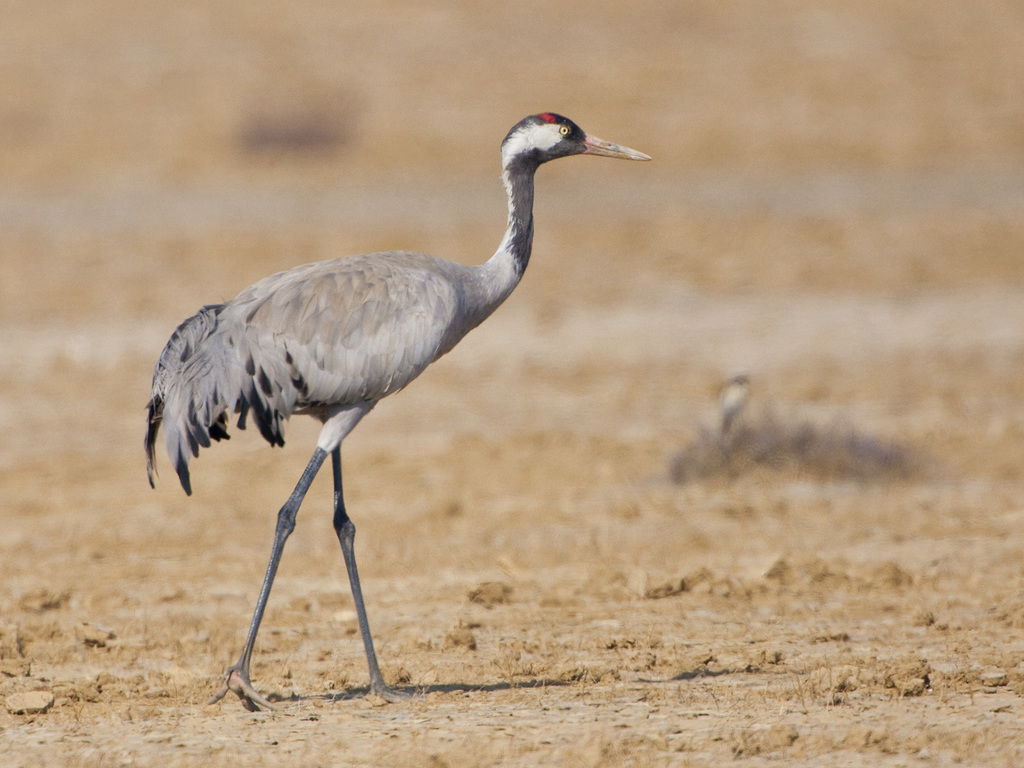
Common Crane
Grus grus
Also known as: Crane
Habitat
Aquatic
Diet
PlantSeed
Active Time
Diurnal
Size
5.5 kg
About This Species
A tall, elegant grey crane with a red crown patch, found on wetlands, wet grassland and agricultural fields, often in pairs or family groups that perform loud, far-carrying bugling duets. Large migratory flocks gather at traditional stopover wetlands, sometimes numbering in the thousands, where birds feed on roots, grain and invertebrates in open fields by day. Autumn passage and winter roosting concentrations at key wetland sites are the most reliable times to see large numbers together.
Ethical Viewing Guidelines
- Cranes are wary of people on foot and will move off or take flight well before a close approach, so viewing from a hide, vehicle, or public road at distance is the standard and most effective method.
- This species is legally protected across essentially all of its range, and disturbing roost sites or nesting pairs is prohibited under wildlife law in the countries it breeds and winters in.
- Staying on marked trails and keeping well back from roost sites, especially at dawn and dusk when birds are moving to and from feeding grounds, avoids costly energy loss during migration and winter.
LCAvesGruiformesGruidae
Seasonal Activity
2,405,129 sightings · 2000–2026
Citizen science records via GBIF
All monthsThis month
Classification
- Kingdom
- Animalia
- Phylum
- Chordata
- Class
- Aves
- Order
- Gruiformes
- Family
- Gruidae
Traits
- Diet
- PlantSeed
- Foraging
- Aquatic
- Activity
- Diurnal
- Body mass
- 5.5 kg
Photo
(c) Tarique Sani, some rights reserved (CC BY-NC-SA)
CC-BY-NC-SA-4.0
Occurrence data from GBIF.