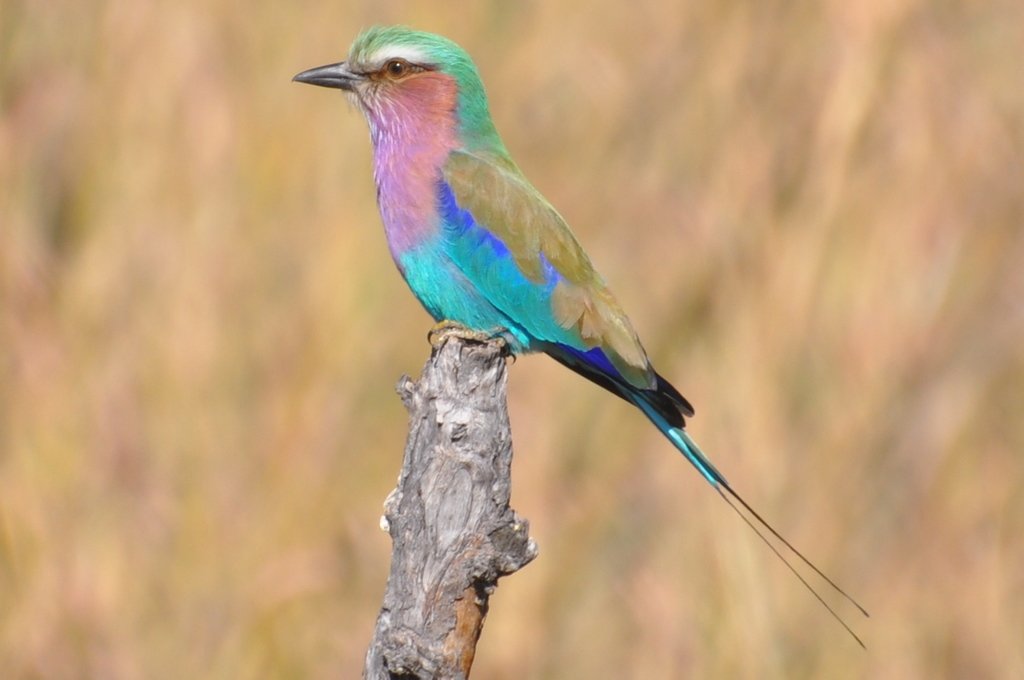
Lilac-Breasted Roller
Coracias caudatus
Habitat
Ground
Diet
Omnivore
Active Time
Diurnal
Size
110 g
About This Species
Perches conspicuously on exposed branches, wires and fence posts in savanna and open woodland, dropping to the ground to snatch insects and returning to the same lookout. The turquoise-and-lilac plumage and tumbling, rolling display flight (which gives the family its name) are most active in the breeding season, and dry-season game drives across East and southern Africa turn them up reliably on roadside perches.
Ethical Viewing Guidelines
- Stay in a vehicle or keep well back on foot; a perched bird that keeps shifting its weight or bobbing is signalling discomfort and about to flush.
- Protection status varies by country across its African range, from general wildlife-protection statutes to no specific legal cover, so treat local park and reserve rules as the binding standard rather than assuming a blanket law.
- Avoid approaching active nest cavities, which are usually in tree holes and sensitive to disturbance.
LCAvesCoraciiformesCoraciidae
Seasonal Activity
191,509 sightings · 2000–2026
Citizen science records via GBIF
All monthsThis month
Classification
- Kingdom
- Animalia
- Phylum
- Chordata
- Class
- Aves
- Order
- Coraciiformes
- Family
- Coraciidae
Traits
- Diet
- Omnivore
- Foraging
- Ground
- Activity
- Diurnal
- Body mass
- 110 g
Photo
(c) Dave Govoni, some rights reserved (CC BY-NC-SA)
CC-BY-NC-SA-4.0
Occurrence data from GBIF.