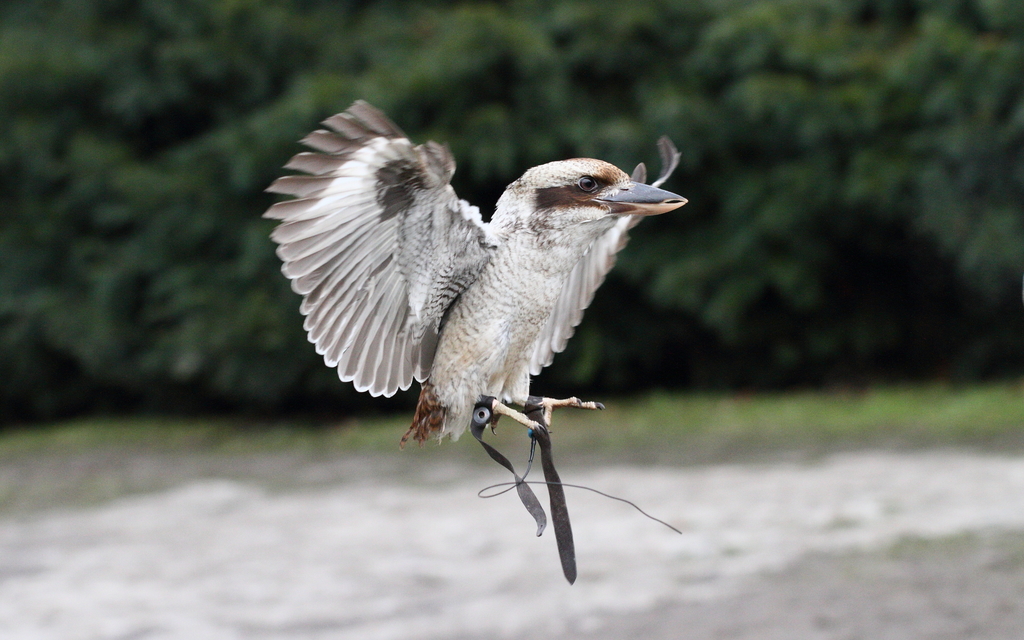
Laughing Kookaburra
Dacelo novaeguineae
Also known as: Kookaburra
Habitat
Ground
Diet
Invertebrate
Active Time
Diurnal
Size
334 g
About This Species
This large, well-known kingfisher is usually detected by its loud, cackling call, often heard at dawn and dusk from open woodland, parks, and gardens across eastern and southern Australia. It hunts by watching from an exposed perch before dropping to the ground to take insects, small reptiles, and other prey, so open ground beneath tall trees is a good place to look. It is present year-round and often becomes habituated to people in parks and campgrounds.
Ethical Viewing Guidelines
- Keep a distance of several metres from a perched or hunting bird, and resist the temptation to offer food, which is discouraged even though many individuals have become accustomed to humans in picnic areas.
- Wildlife protection law in Australia covers native birds and their nests, and disturbing nesting hollows in trees is an offence.
- Enjoy habituated birds without touching or hand-feeding them, and give any bird excavating or attending a nest hollow extra space.
LCAvesCoraciiformesAlcedinidae
Seasonal Activity
1,115,021 sightings · 2000–2026
Citizen science records via GBIF
All monthsThis month
Classification
- Kingdom
- Animalia
- Phylum
- Chordata
- Class
- Aves
- Order
- Coraciiformes
- Family
- Alcedinidae
Traits
- Diet
- Invertebrate
- Foraging
- Ground
- Activity
- Diurnal
- Body mass
- 334 g
Photo
(c) mcamcamca, some rights reserved (CC BY-SA)
CC-BY-SA-4.0
Occurrence data from GBIF.