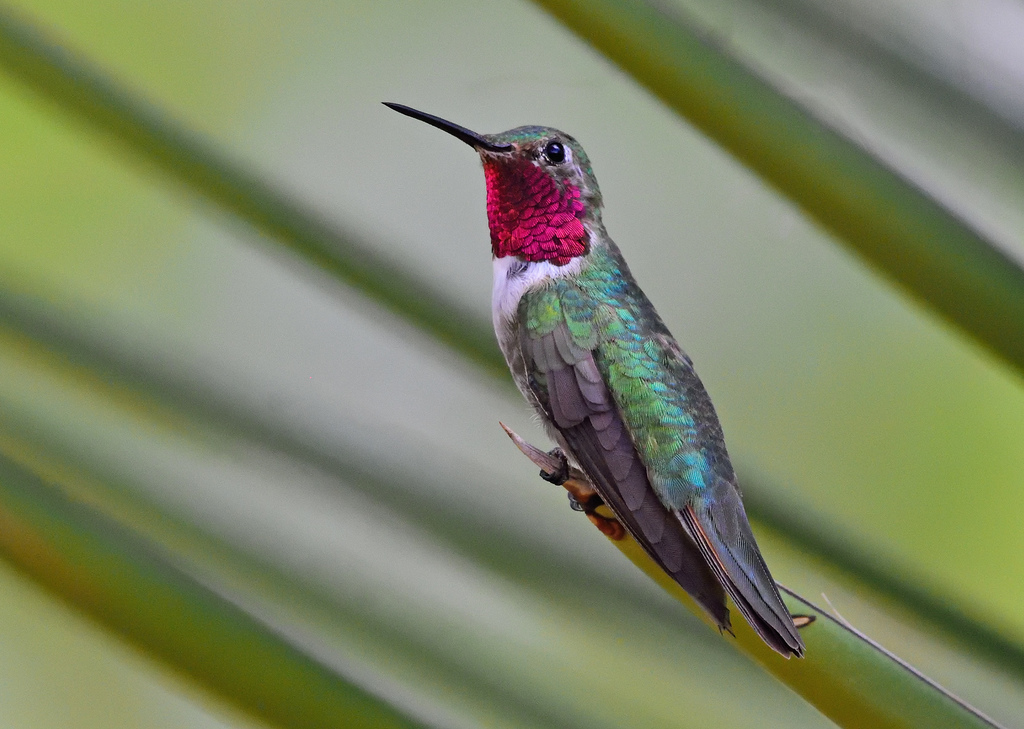
Broad-Tailed Hummingbird
Selasphorus platycercus
About This Species
Breeding males produce a distinctive metallic trilling sound with their wings in flight, a useful clue even before the bird is spotted around montane meadows, aspen groves and forest clearings in the Rocky Mountain region. It feeds on nectar from tubular flowers and defends favoured patches aggressively, making a well-flowered subalpine meadow in summer the most reliable place to watch one perch, feed and chase rivals. Spring through late summer, when high-elevation wildflowers are in bloom, is the best window to see it on its breeding grounds before it migrates south.
Ethical Viewing Guidelines
- This species is protected under the US Migratory Bird Treaty Act and equivalent Mexican wildlife law across its breeding and wintering range, which prohibits capture or harassment.
- Watching from a few metres at a flowering patch or feeder without blocking access, and avoiding handling or disturbing a nest, is normally sufficient.
- Because enforcement and specific distance guidance differ between the United States and Mexico, following the more cautious approach of minimal interference is the safer default.
Seasonal Activity
623,373 sightings · 2000–2026
Citizen science records via GBIF
Classification
- Kingdom
- Animalia
- Phylum
- Chordata
- Class
- Aves
- Order
- Apodiformes
- Family
- Trochilidae
Photo
(c) Ad Konings, some rights reserved (CC BY-NC), uploaded by Ad Konings
CC-BY-NC-4.0
Occurrence data from GBIF.