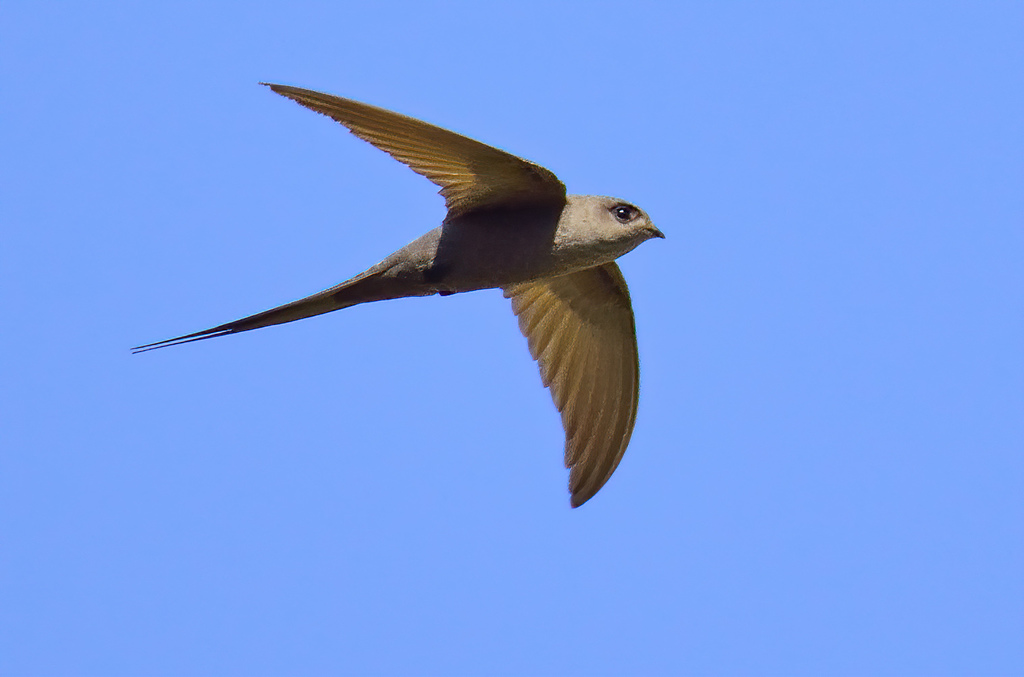
African Palm Swift
Cypsiurus parvus
Also known as: Nakkati, Palm Swift
Habitat
Aerial
Diet
Invertebrate
Active Time
Diurnal
Size
14 g
About This Species
Almost never seen away from the air, wheeling in swift, agile flocks around palm trees, towns and open country where it feeds entirely on flying insects. Its thin, twittering calls given on the wing are often the first clue to a flock overhead, and it nests and roosts by clinging to the underside of palm fronds. Warm, insect-rich conditions bring the largest and most active feeding flocks into view.
Ethical Viewing Guidelines
- There is little need to approach this species at all, since it is best watched from a distance as it forages overhead.
- Wild bird protections apply across its range in Africa, and palm trees used for nesting and roosting should not be disturbed or felled if occupied.
- Watching from beneath a roost tree without disturbing the fronds is the least disruptive way to observe it.
LCAvesApodiformesApodidae
Seasonal Activity
273,434 sightings · 2000–2026
Citizen science records via GBIF
All monthsThis month
Classification
- Kingdom
- Animalia
- Phylum
- Chordata
- Class
- Aves
- Order
- Apodiformes
- Family
- Apodidae
Traits
- Diet
- Invertebrate
- Foraging
- Aerial
- Activity
- Diurnal
- Body mass
- 14 g
Photo
(c) Ad Konings, some rights reserved (CC BY-NC), uploaded by Ad Konings
CC-BY-NC-4.0
Occurrence data from GBIF.