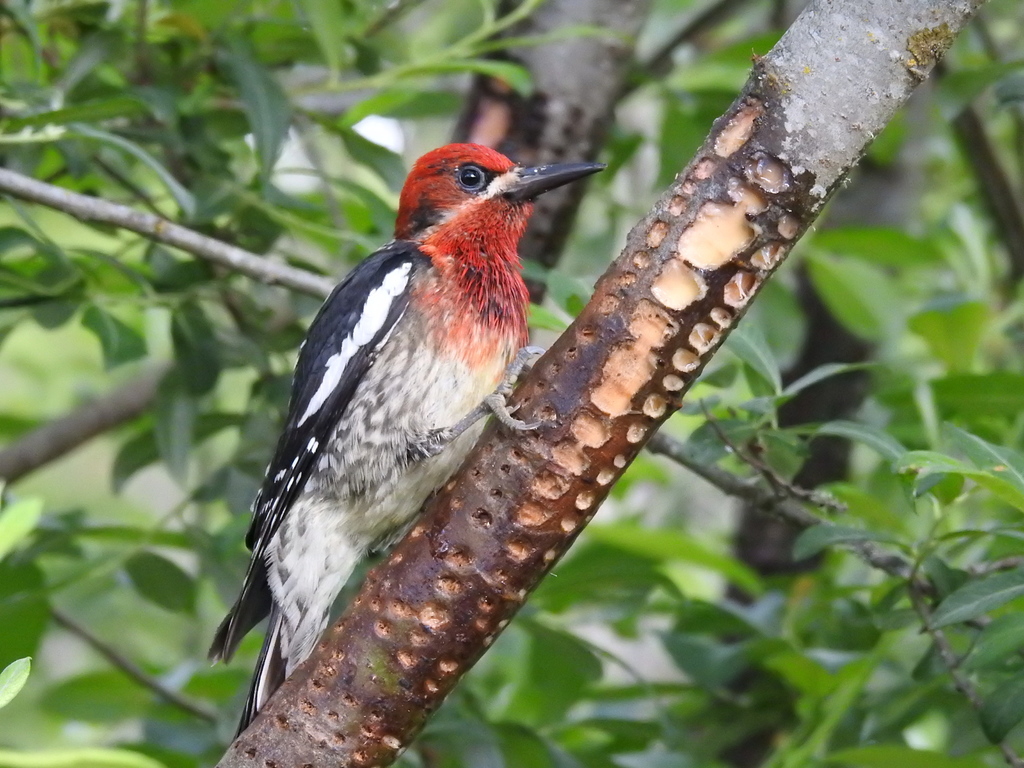
Red-Breasted Sapsucker
Sphyrapicus ruber
Also known as: Red-Breasted Woodpecker
About This Species
Look for neat rows of small holes drilled in the bark of conifers and other trees across western North American forests, since this woodpecker maintains sap wells that it and other species return to feed from repeatedly. Look and listen for slow, irregular drumming and a soft, catlike mewing call, and check trees with fresh sap wells at any time of day, since feeding activity is not strongly tied to dawn or dusk. Spring, when sap flow is highest and birds are establishing territories, tends to be the most productive season to find active wells.
Ethical Viewing Guidelines
- A quiet, gradual approach while watching a tree with active sap wells usually allows reasonably close views without flushing the bird, though sudden movement or noise at the base of the tree can still scare it off.
- Woodpeckers and their nest cavities are protected under general wildlife law across the US and Canada, though the specific statutes and permit requirements differ between the two countries, so check local regulations rather than assuming one set of rules covers both.
- Leaving dead and dying trees undisturbed where possible supports the sap wells and cavities this species depends on.
Seasonal Activity
434,793 sightings · 2000–2026
Citizen science records via GBIF
Classification
- Kingdom
- Animalia
- Phylum
- Chordata
- Class
- Aves
- Order
- Piciformes
- Family
- Picidae
Photo
(c) Mike, some rights reserved (CC BY-NC), uploaded by Mike
CC-BY-NC-4.0
Occurrence data from GBIF.