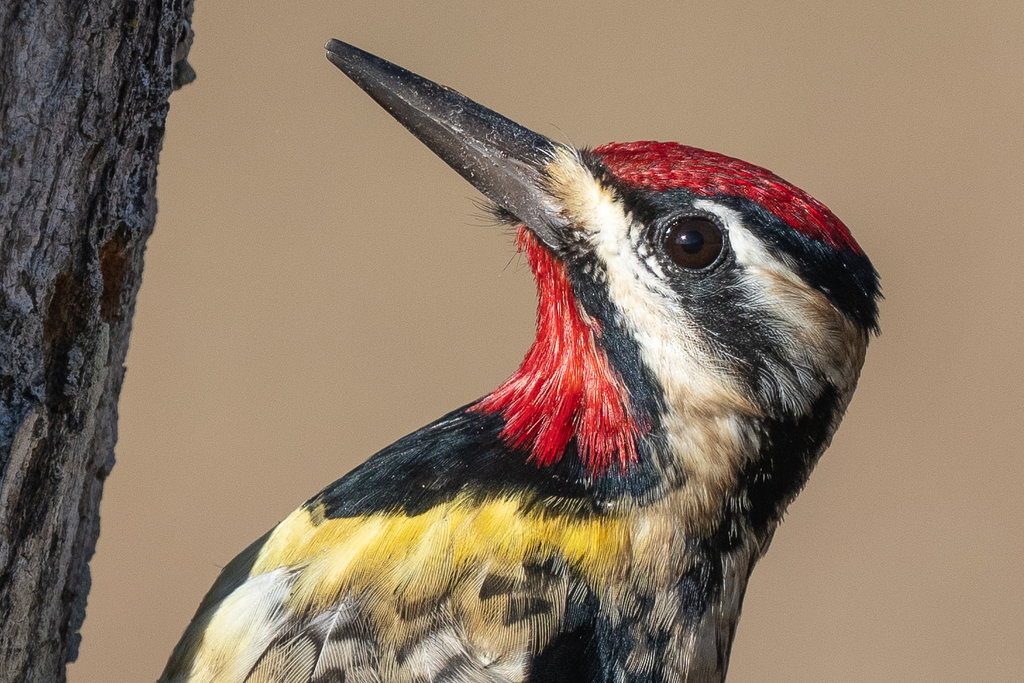
Yellow-Bellied Sapsucker
Sphyrapicus varius
Also known as: Yellow-Bellied Woodpecker
About This Species
Check deciduous and mixed woodland for neat rows of small holes drilled in tree bark, a sign this woodpecker has been feeding on sap and the insects it attracts. Look and listen for its distinctive irregular, stuttering drumming pattern, quite different from the steady drumming of other woodpeckers, along with a nasal mewing call. Spring migration and the breeding season in northern forests offer the best chance to see birds excavating nest cavities or tending sap wells.
Ethical Viewing Guidelines
- Viewing from a few metres away without approaching an active nest cavity is usually sufficient, since disturbance risk is mainly tied to nesting trees rather than feeding sap wells.
- This species and its nests are protected under the Migratory Bird Treaty Act in the United States and Canada, making it illegal to disturb an active nest or remove a nest tree during breeding season.
- Avoid tapping on or approaching nest trees closely, as sustained disturbance can cause adults to desert eggs or young.
LCAvesPiciformesPicidae
Seasonal Activity
2,582,657 sightings · 2000–2026
Citizen science records via GBIF
All monthsThis month
Classification
- Kingdom
- Animalia
- Phylum
- Chordata
- Class
- Aves
- Order
- Piciformes
- Family
- Picidae
Photo
(c) bwood708, some rights reserved (CC BY-NC), uploaded by bwood708
CC-BY-NC-4.0
Occurrence data from GBIF.