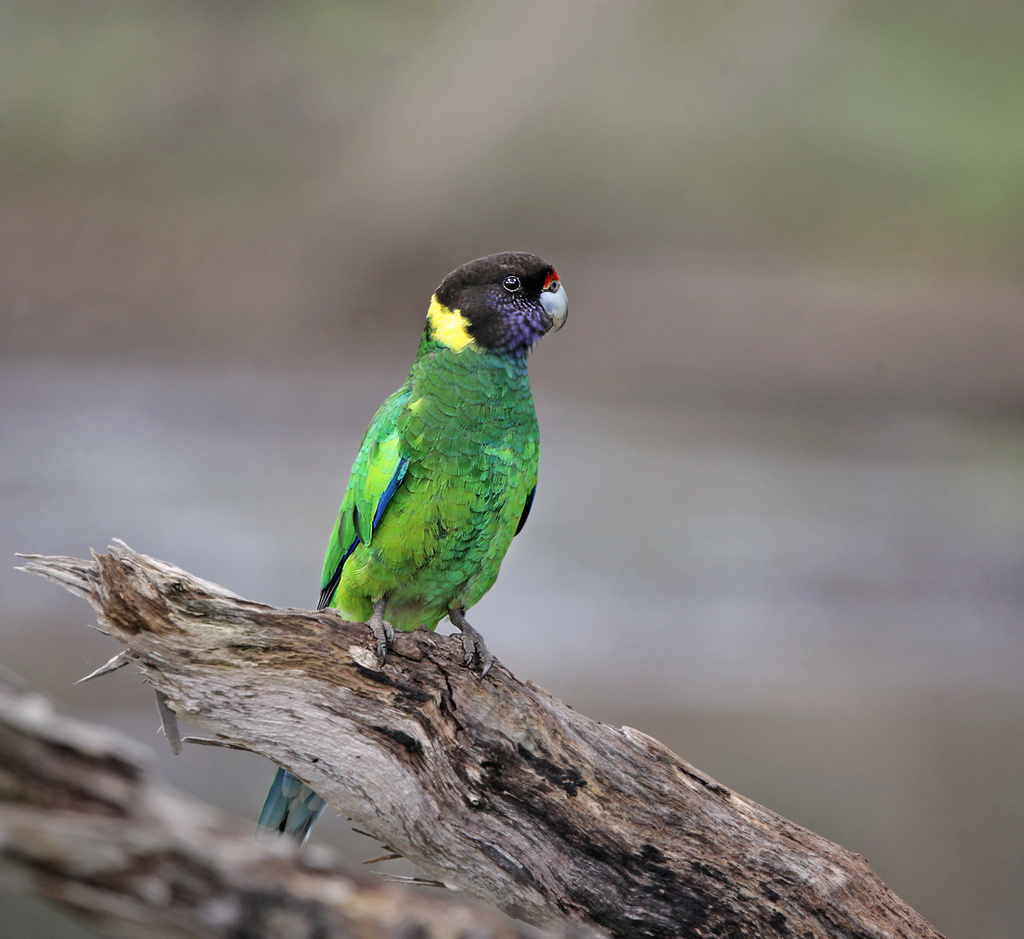
Australian Ringneck
Barnardius zonarius
Also known as: Port Lincoln Parrot
Habitat
Mid-canopy
Diet
FruiNect
Active Time
Diurnal
Size
121 g
About This Species
Look for noisy flocks flying between eucalypt woodland, mallee scrub and farmland edges across arid and semi-arid Australia, especially around dawn and dusk when birds move to and from water. They feed on seeds, blossom and fruit in the mid-canopy and often perch conspicuously on dead branches or powerlines between feeding bouts. Breeding hollows in old eucalypts are a good place to watch pairs in spring.
Ethical Viewing Guidelines
- A stationary distance of 15-20 metres with binoculars is enough to watch normal feeding and perching behaviour without birds flushing.
- Native parrots are protected under Australian state wildlife legislation, which prohibits capture, harm or disturbance at nest hollows without a permit.
- Avoid approaching occupied nest hollows and do not use calls or food to draw birds closer.
LCAvesPsittaciformesPsittacidae
Seasonal Activity
244,868 sightings · 2000–2026
Citizen science records via GBIF
All monthsThis month
Classification
- Kingdom
- Animalia
- Phylum
- Chordata
- Class
- Aves
- Order
- Psittaciformes
- Family
- Psittacidae
Traits
- Diet
- FruiNect
- Foraging
- Mid-canopy
- Activity
- Diurnal
- Body mass
- 121 g
Photo
(c) dandm22, some rights reserved (CC BY-NC)
CC-BY-NC-4.0
Occurrence data from GBIF.