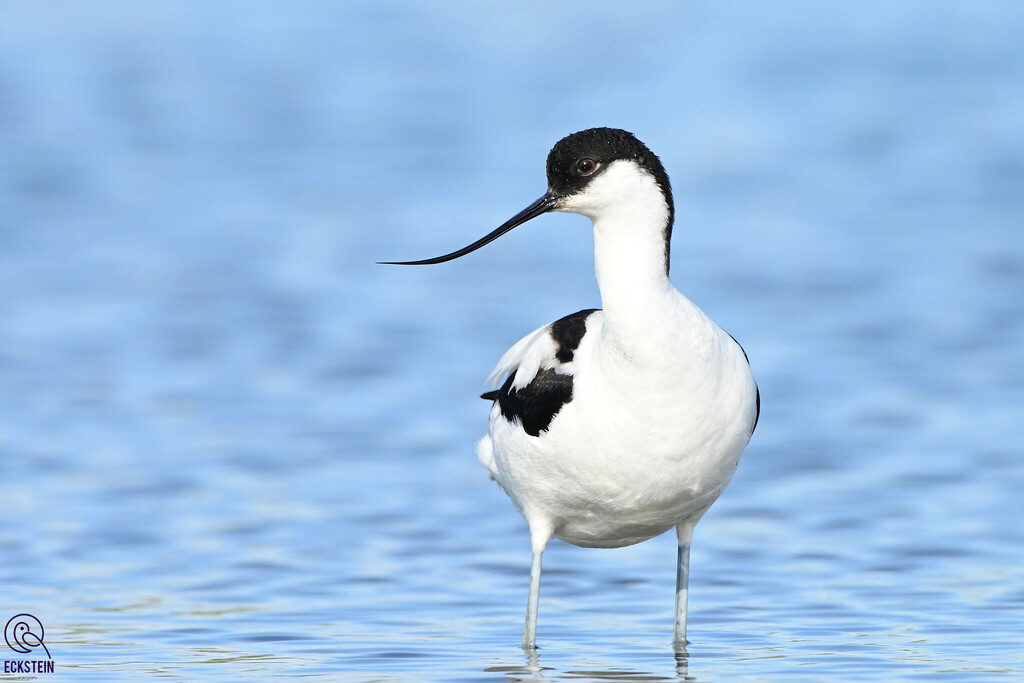
Pied Avocet
Recurvirostra avosetta
Also known as: Avocet, Eurasian Avocet
Habitat
Aquatic
Diet
Invertebrate
Active Time
Diurnal
Size
304 g
About This Species
This elegant wading bird frequents shallow lagoons, estuaries and salt pans, sweeping its upturned bill side to side through soft mud and water to catch invertebrates. It is most visible at low tide when mudflats are exposed, and passage periods in spring and autumn often bring larger concentrations at coastal wetland reserves. Calm, overcast days with good light make the black-and-white plumage and feeding action easy to observe from a hide.
Ethical Viewing Guidelines
- Wading birds are highly sensitive to disturbance on tidal feeding grounds, so viewing from a hide or at a distance of at least 50 to 100 metres is recommended, ideally with a scope rather than by approaching on foot.
- Many coastal wetlands hold protected status, and disturbing feeding or roosting waders is restricted under wildlife and habitat protection law in much of its range, particularly in Europe.
- Staying on marked paths and avoiding flushing flocks preserves both the birds' energy budget and the quality of the view.
LCAvesCharadriiformesRecurvirostridae
Seasonal Activity
1,161,968 sightings · 2000–2026
Citizen science records via GBIF
All monthsThis month
Classification
- Kingdom
- Animalia
- Phylum
- Chordata
- Class
- Aves
- Order
- Charadriiformes
- Family
- Recurvirostridae
Traits
- Diet
- Invertebrate
- Foraging
- Aquatic
- Activity
- Diurnal
- Body mass
- 304 g
Photo
(c) Erik Eckstein, some rights reserved (CC BY-NC), uploaded by Erik Eckstein
CC-BY-NC-4.0
Occurrence data from GBIF.