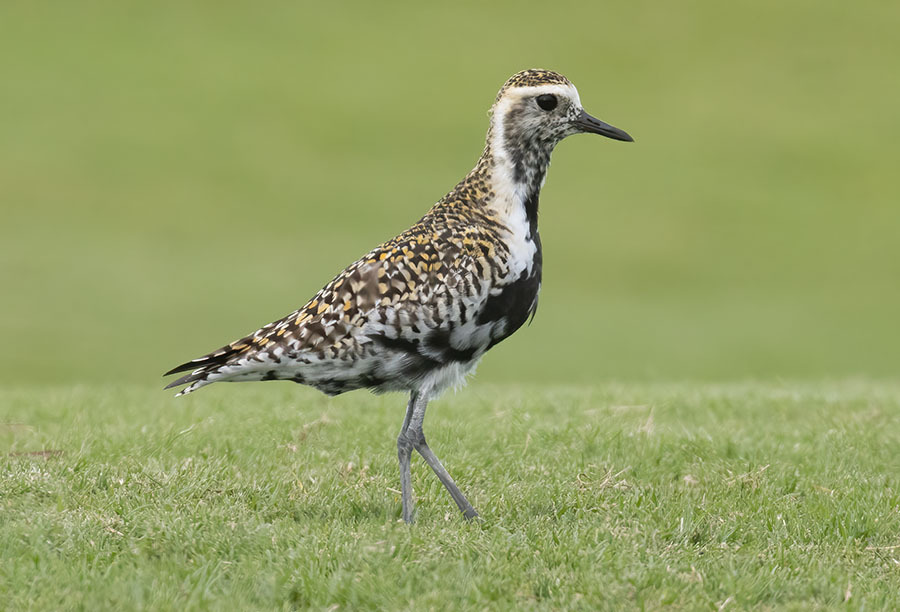
Pacific Golden Plover
Pluvialis fulva
Habitat
Ground
Diet
Invertebrate
Active Time
Diurnal
Size
135 g
About This Species
Look for this stocky plover on coastal mudflats, beaches, athletic fields, and short-grass airstrips across the Pacific, where it stands upright and runs in short bursts before pausing to peck at invertebrates. Breeding-plumaged birds in spring show a striking black face and underparts bordered in white, making May migration the most rewarding time to look. Outside the breeding season it is a quiet, well-camouflaged wader, often detected first by its clear, whistled contact call.
Ethical Viewing Guidelines
- Stay back at least 30-50 metres and watch from a vehicle or blind where possible, since flushing feeding or roosting shorebirds wastes energy they need for long-distance migration.
- Coastal wetlands used by this species are frequently protected under national wildlife or migratory bird laws, though the specific rules and enforcement vary widely across its huge non-breeding range, so check local regulations rather than assuming one country's protections apply elsewhere.
- Avoid approaching nests directly if breeding birds are encountered, as this species relies on camouflage and can be flushed easily.
LCAvesCharadriiformesCharadriidae
Seasonal Activity
385,306 sightings · 2000–2026
Citizen science records via GBIF
All monthsThis month
Classification
- Kingdom
- Animalia
- Phylum
- Chordata
- Class
- Aves
- Order
- Charadriiformes
- Family
- Charadriidae
Traits
- Diet
- Invertebrate
- Foraging
- Ground
- Activity
- Diurnal
- Body mass
- 135 g
Photo
(c) Paul Donahue, some rights reserved (CC BY-NC), uploaded by Paul Donahue
CC-BY-NC-4.0
Occurrence data from GBIF.