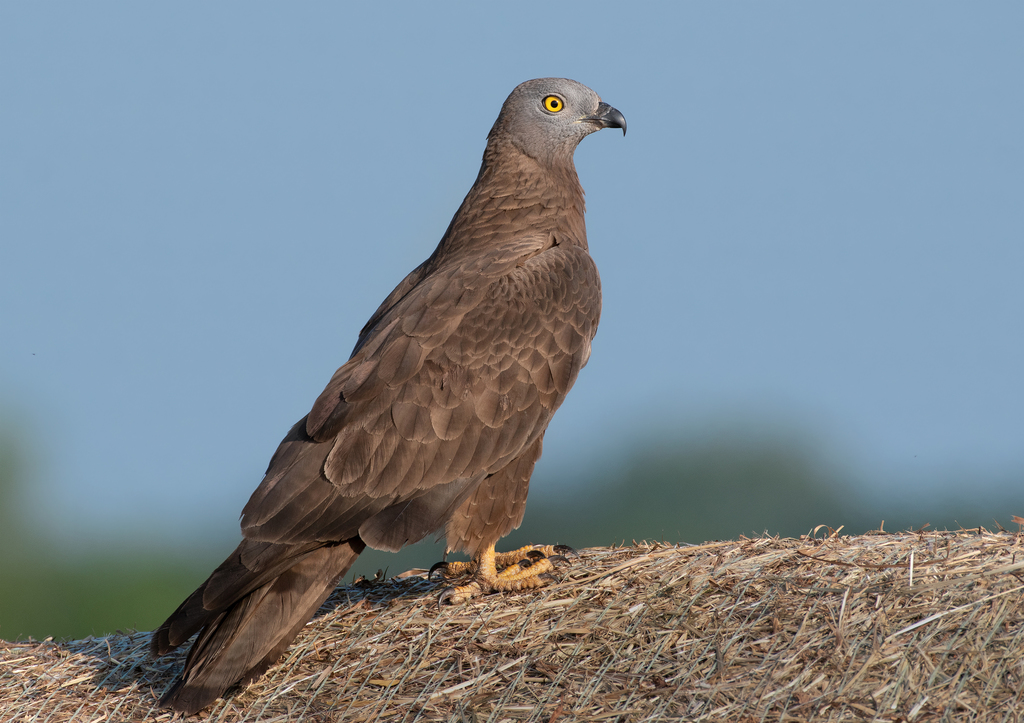
European Honey Buzzard
Pernis apivorus
Also known as: Honey Buzzard, Eurasian Honey-Buzzard, Western Honey Buzzard
Habitat
Understory
Diet
Invertebrate
Active Time
Diurnal
Size
754 g
About This Species
Watch for this slim, long-tailed raptor over deciduous and mixed woodland across Europe, where it specialises in digging out the nests of wasps and bees to feed on the larvae and comb. It can be told from similar buzzards by its smaller head, longer tail and more languid, harrier-like flight on flatter wings, and it performs a distinctive butterfly-like display flight over the canopy in early summer. Look for it between late spring and late summer, since it is a long-distance migrant that winters in tropical Africa and is absent from Europe the rest of the year.
Ethical Viewing Guidelines
- Watch from woodland edges or tracks rather than approaching a nest site directly, since this species nests in tree canopies that are easily disturbed by anyone climbing or lingering too close beneath them.
- Birds of prey and their nests are strictly protected under wildlife law across the European Union and the United Kingdom, with specific penalties for disturbance during the breeding season, though enforcement details differ between countries.
- Because it relies on locating and excavating insect nests undisturbed to feed itself and its young, minimising noise and movement near a foraging bird is as important as keeping distance from the nest itself.
Seasonal Activity
647,600 sightings · 2000–2026
Citizen science records via GBIF
Classification
- Kingdom
- Animalia
- Phylum
- Chordata
- Class
- Aves
- Order
- Accipitriformes
- Family
- Accipitridae
Traits
- Diet
- Invertebrate
- Foraging
- Understory
- Activity
- Diurnal
- Body mass
- 754 g
Photo
(c) vyatka, some rights reserved (CC BY-NC), uploaded by vyatka
CC-BY-NC-4.0
Occurrence data from GBIF.