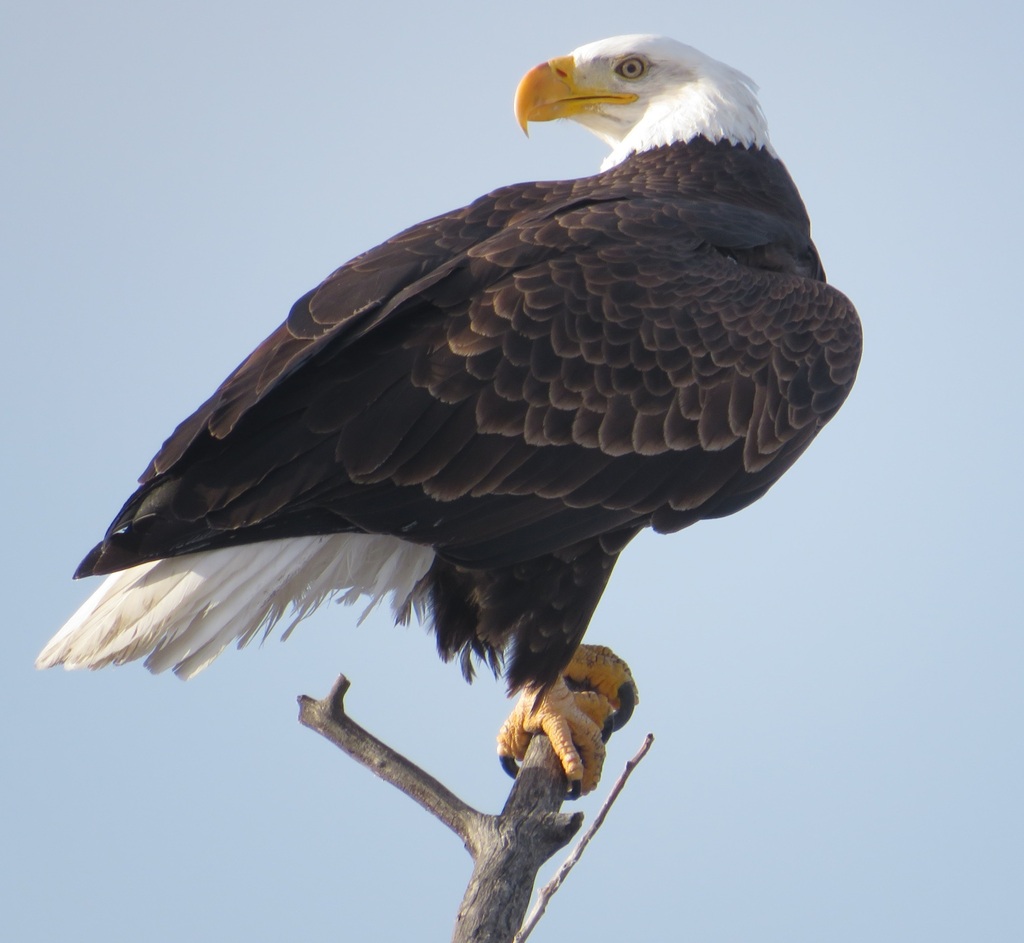
Bald Eagle
Haliaeetus leucocephalus
Also known as: American Bald Eagle
Habitat
Aquatic
Diet
VertFishScav
Active Time
Diurnal
Size
4.7 kg
About This Species
Look for this large raptor near rivers, lakes and coastlines, where it perches in tall trees or soars on broad wings while hunting fish and waterfowl. Adults show a white head and tail against a dark body, while immatures are mottled brown and take several years to reach full adult plumage. Winter congregations near open water, and nesting activity in early spring, are among the most reliable times to observe one.
Ethical Viewing Guidelines
- Keep a substantial distance, generally at least 100 metres, from nest trees and roosting or feeding birds, since this species is sensitive to disturbance and may abandon nests if flushed repeatedly.
- It receives strong legal protection in the United States under dedicated eagle protection law as well as general migratory bird statutes, and comparable protections apply elsewhere in its range; disturbing nests or approaching too closely can carry serious penalties.
- Use optics rather than approaching, and heed any posted nest-buffer closures.
LCAvesAccipitriformesAccipitridae
Seasonal Activity
7,516,326 sightings · 2000–2026
Citizen science records via GBIF
All monthsThis month
Classification
- Kingdom
- Animalia
- Phylum
- Chordata
- Class
- Aves
- Order
- Accipitriformes
- Family
- Accipitridae
Traits
- Diet
- VertFishScav
- Foraging
- Aquatic
- Activity
- Diurnal
- Body mass
- 4.7 kg
Photo
(c) Addy, some rights reserved (CC BY-NC), uploaded by Addy
CC-BY-NC-4.0
Occurrence data from GBIF.