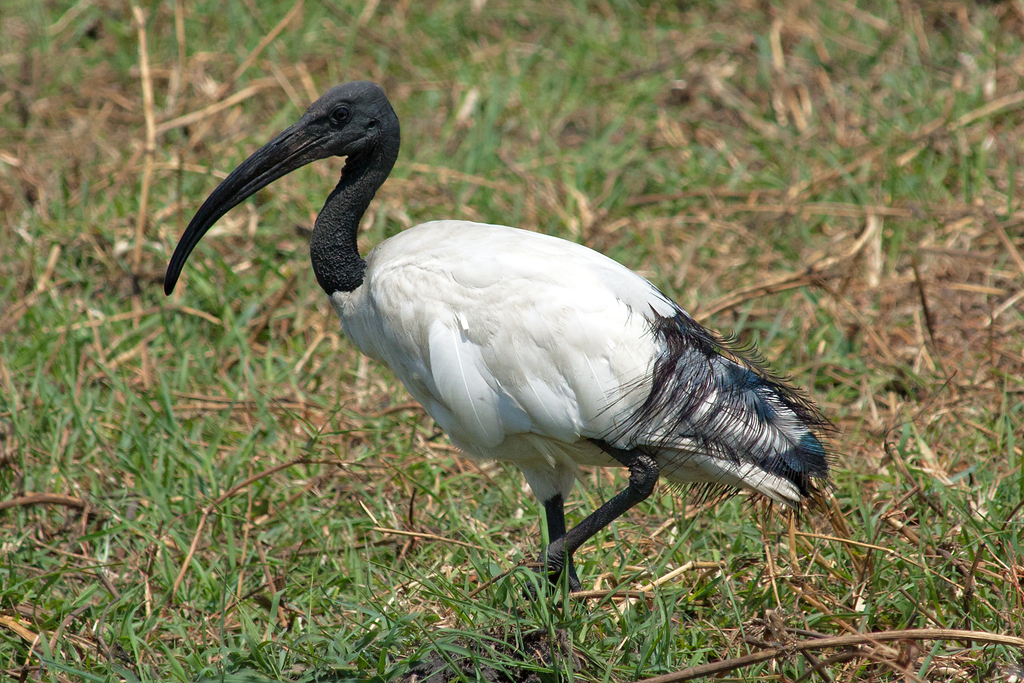
Sacred Ibis
Threskiornis aethiopicus
Also known as: African Sacred Ibis
Habitat
Ground
Diet
Invertebrate
Active Time
Diurnal
Size
1.5 kg
About This Species
This large white ibis with a bare black head and neck is common around wetlands, farmland, and refuse sites across much of Africa, where it wades and probes the ground for invertebrates, small vertebrates, and carrion. Its stately, deliberate walk and habit of gathering in loose flocks at feeding sites make it conspicuous in open areas near water. Dry season, when birds concentrate around remaining water sources, tends to offer the most reliable and abundant sightings.
Ethical Viewing Guidelines
- Viewing from a moderate distance with binoculars is enough to watch normal foraging behavior without causing birds to take flight.
- Wildlife protection laws vary considerably among African countries within its range, so travelers should confirm local regulations rather than assume uniform rules.
- Avoiding close approach to breeding colonies, which can be sensitive to disturbance, is the most important precaution.
LCAvesPelecaniformesThreskiornithidae
Seasonal Activity
395,365 sightings · 2000–2026
Citizen science records via GBIF
All monthsThis month
Classification
- Kingdom
- Animalia
- Phylum
- Chordata
- Class
- Aves
- Order
- Pelecaniformes
- Family
- Threskiornithidae
Traits
- Diet
- Invertebrate
- Foraging
- Ground
- Activity
- Diurnal
- Body mass
- 1.5 kg
Photo
(c) Federico Moroni, some rights reserved (CC BY-NC)
CC-BY-NC-4.0
Occurrence data from GBIF.