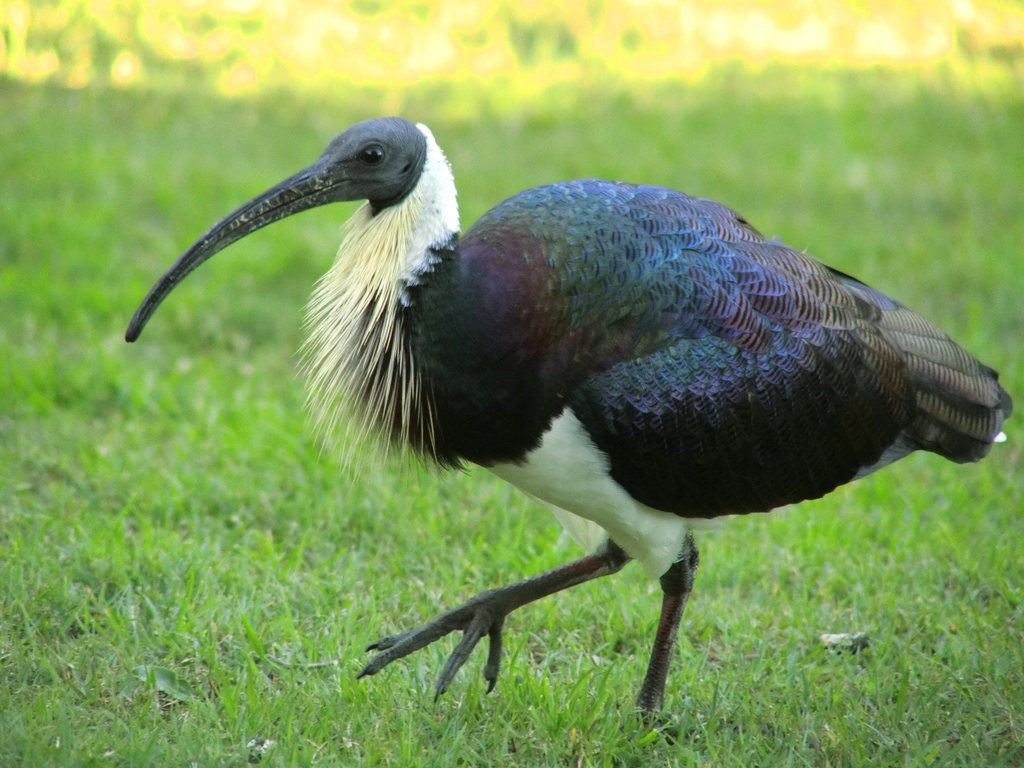
Straw-Necked Ibis
Threskiornis spinicollis
About This Species
This ibis forages across Australian grasslands, wetlands, and farmland, often taking large numbers of insects such as locusts, and gathers in large, sometimes mixed-species flocks. It nests colonially in wetland trees, with colonies numbering into the thousands at favored sites. Wetlands and grassland after rain, when insect prey is abundant, are the most productive times and places to see large feeding flocks.
Ethical Viewing Guidelines
- It is protected under Australian state and federal wildlife legislation, and breeding colonies are particularly sensitive to disturbance, with adults prone to abandoning nests if repeatedly flushed.
- View colonies from a distance, ideally with binoculars or a scope rather than approaching by foot or boat, and avoid lingering near a rookery during the breeding season.
LCAvesPelecaniformesThreskiornithidae
Seasonal Activity
415,926 sightings · 2000–2026
Citizen science records via GBIF
All monthsThis month
Classification
- Kingdom
- Animalia
- Phylum
- Chordata
- Class
- Aves
- Order
- Pelecaniformes
- Family
- Threskiornithidae
Photo
(c) Charles Lam, some rights reserved (CC BY-SA)
CC-BY-SA-4.0
Occurrence data from GBIF.