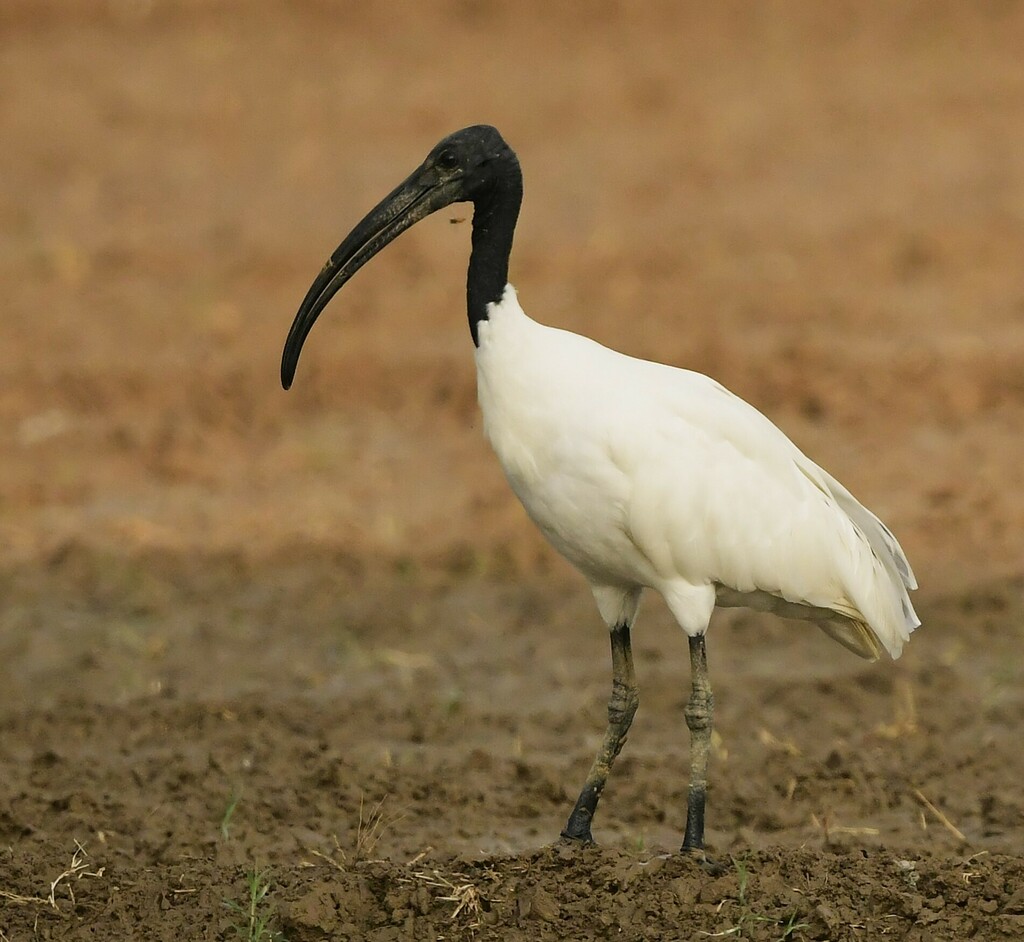
Black-Headed Ibis
Threskiornis melanocephalus
Also known as: Black-Necked Ibis, Indian White Ibis, Oriental White Ibis, Oriental Ibis
Habitat
Aquatic
Diet
VertFishScav
Active Time
Diurnal
Size
1.3 kg
About This Species
Forages in shallow wetlands, flooded fields and along riverbanks, probing soft mud with its long curved bill for invertebrates, and is often seen mixed in with egrets and storks. Early morning and late afternoon are the best times to watch it feeding, and numbers swell noticeably in wetlands that fill after the monsoon.
Ethical Viewing Guidelines
- Keep roughly 20 to 30 metres from feeding or roosting birds, and considerably more distance from any nesting colony.
- It is protected under wildlife law in India and most other range states across South and Southeast Asia, though the specific protections and how strictly they are enforced vary by country.
LCAvesPelecaniformesThreskiornithidae
Seasonal Activity
302,069 sightings · 2000–2026
Citizen science records via GBIF
All monthsThis month
Classification
- Kingdom
- Animalia
- Phylum
- Chordata
- Class
- Aves
- Order
- Pelecaniformes
- Family
- Threskiornithidae
Traits
- Diet
- VertFishScav
- Foraging
- Aquatic
- Activity
- Diurnal
- Body mass
- 1.3 kg
Photo
(c) Kurt Hennige, some rights reserved (CC BY-NC), uploaded by Kurt Hennige
CC-BY-NC-4.0
Occurrence data from GBIF.