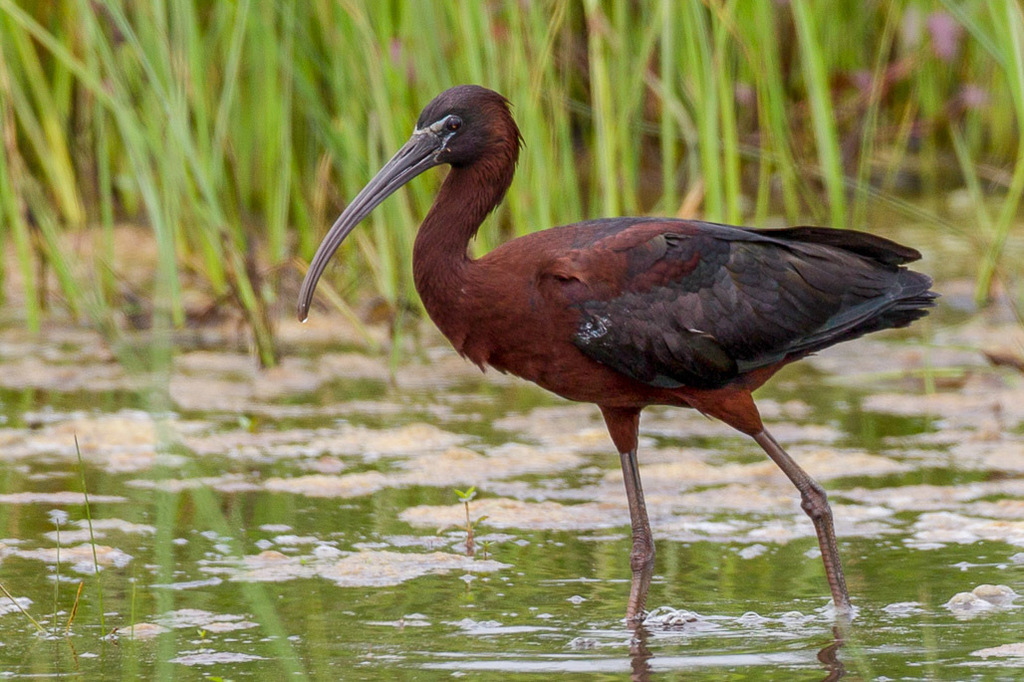
Glossy Ibis
Plegadis falcinellus
Habitat
Aquatic
Diet
Invertebrate
Active Time
Diurnal
Size
627 g
About This Species
Found in wetlands, marshes, flooded fields and shallow lagoons, probing soft mud with its long, downcurved bill for invertebrates. The plumage looks blackish at a distance but glows bronze and green in good light, and birds often forage in loose flocks or fly in lines between roosting and feeding sites. Early morning and late afternoon light along wetland edges gives the best views of both the sheen and the feeding behaviour.
Ethical Viewing Guidelines
- Keep well back from feeding or roosting groups, ideally 50 metres or more with binoculars, since flushing a flock wastes energy reserves that wading birds depend on.
- Wetland birds receive some form of protection under national and international law across its range, though the specifics differ by country, so check local regulations before approaching a nesting colony.
- Stay on paths or use hides where provided rather than walking out into wetland habitat.
LCAvesPelecaniformesThreskiornithidae
Seasonal Activity
1,403,690 sightings · 2000–2026
Citizen science records via GBIF
All monthsThis month
Classification
- Kingdom
- Animalia
- Phylum
- Chordata
- Class
- Aves
- Order
- Pelecaniformes
- Family
- Threskiornithidae
Traits
- Diet
- Invertebrate
- Foraging
- Aquatic
- Activity
- Diurnal
- Body mass
- 627 g
Photo
(c) bwood708, some rights reserved (CC BY-NC), uploaded by bwood708
CC-BY-NC-4.0
Occurrence data from GBIF.