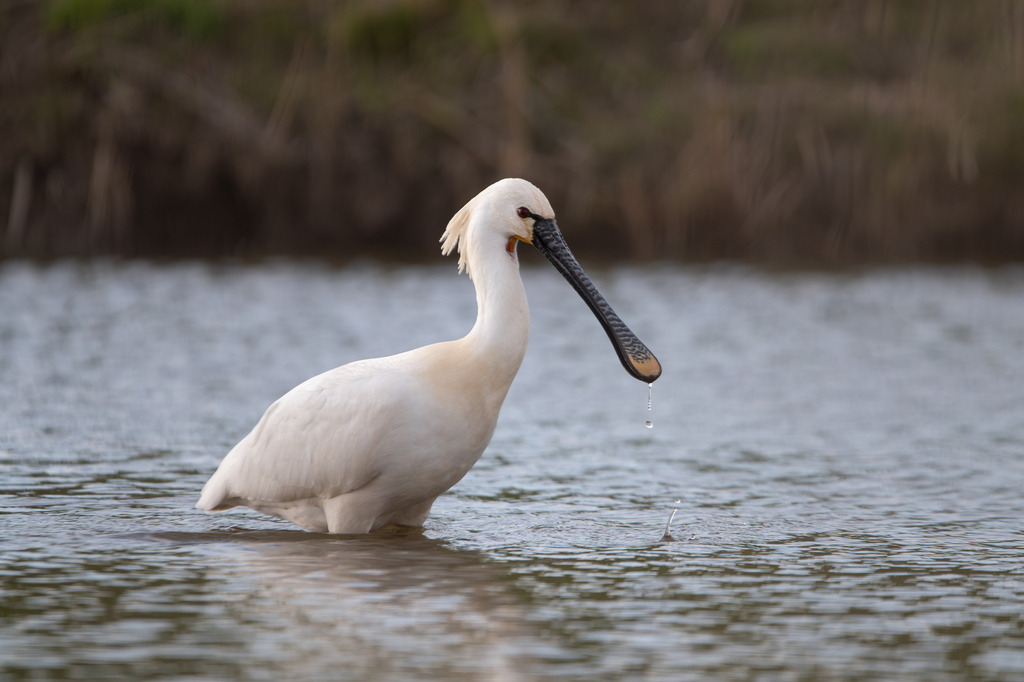
Eurasian Spoonbill
Platalea leucorodia
Also known as: Spoonbill, European Spoonbill, White Spoonbill
Habitat
Aquatic
Diet
Invertebrate
Active Time
Diurnal
Size
1.9 kg
About This Species
Look for this large white wader in shallow lagoons, estuaries and wetland reserves, feeding with a distinctive side-to-side sweeping motion of its long, flattened spoon-shaped bill through the shallows. It nests colonially in reedbeds or waterside trees, so spring and summer bring the best chance of seeing groups together at breeding sites, while migrants and wintering birds can turn up on estuaries and coastal wetlands well outside that range.
Ethical Viewing Guidelines
- Watch feeding or roosting birds from a hide, screened path or a good distance across open water rather than approaching along the shoreline, since this species is easily flushed from the shallow feeding areas it depends on.
- Breeding colonies are particularly sensitive to disturbance and are protected under wildlife and habitats legislation across much of its European range, so keep well back from reedbed or tree colonies during the nesting season and never enter the area to get closer.
Seasonal Activity
1,272,631 sightings · 2000–2026
Citizen science records via GBIF
Classification
- Kingdom
- Animalia
- Phylum
- Chordata
- Class
- Aves
- Order
- Pelecaniformes
- Family
- Threskiornithidae
Traits
- Diet
- Invertebrate
- Foraging
- Aquatic
- Activity
- Diurnal
- Body mass
- 1.9 kg
Photo
(c) Tobias Polzer, some rights reserved (CC BY-NC), uploaded by Tobias Polzer
CC-BY-NC-4.0
Occurrence data from GBIF.