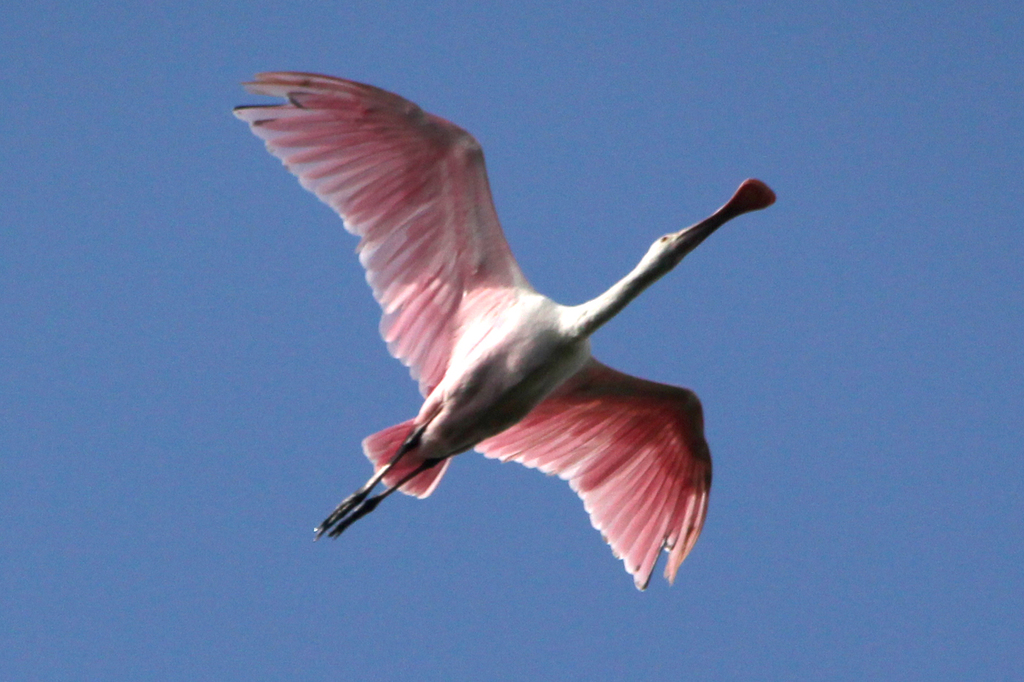
Roseate Spoonbill
Platalea ajaja
About This Species
Look for its unmistakable pink plumage and long, flattened bill sweeping side to side through shallow coastal lagoons, marshes and mangrove edges as it filters out small fish and crustaceans. Feeding is most active around low tide when prey is concentrated in shallow water, and good light in early morning or late afternoon brings out its color best. Breeding colonies, often shared with herons and egrets, are most active in spring.
Ethical Viewing Guidelines
- View from a boardwalk, hide or boat at a comfortable distance rather than approaching feeding or nesting birds directly, since wading birds readily abandon feeding areas or nests when disturbed.
- It is protected under migratory bird and wildlife laws across its range in the Americas, with legal protection for nesting colonies in particular.
- If birds stop feeding and begin watching you or bunching together, that is a sign to back off rather than move closer for a better view.
LCAvesPelecaniformesThreskiornithidae
Seasonal Activity
771,060 sightings · 2000–2026
Citizen science records via GBIF
All monthsThis month
Classification
- Kingdom
- Animalia
- Phylum
- Chordata
- Class
- Aves
- Order
- Pelecaniformes
- Family
- Threskiornithidae
Photo
(c) Kevin Bryant, some rights reserved (CC BY-NC-SA)
CC-BY-NC-SA-4.0
Occurrence data from GBIF.