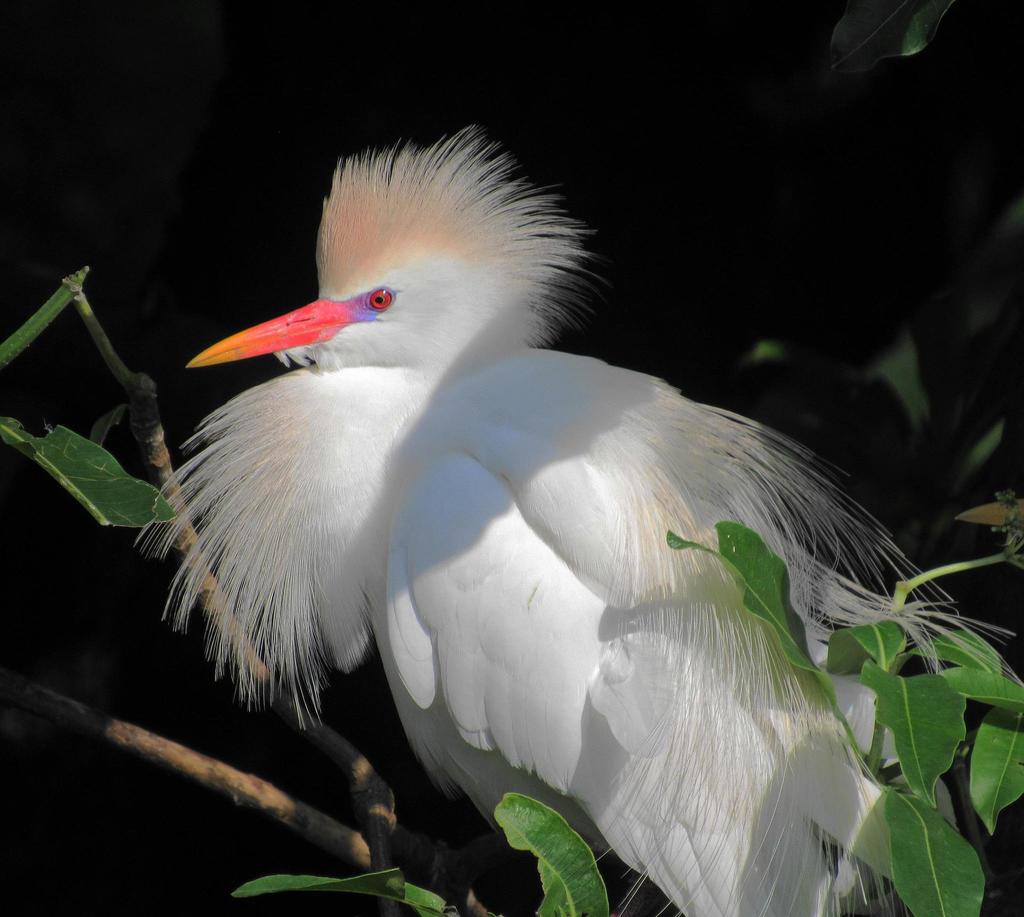
Cattle Egret
Bubulcus ibis
Also known as: Western Cattle Egret, Buff-Backed Heron, Cowbird, Esplugabous, Go Bok
Habitat
Ground
Diet
Invertebrate
Active Time
Diurnal
Size
366 g
About This Species
Look for a stocky white egret following livestock or machinery in open pasture and farmland, snapping up insects flushed by grazing animals or ploughs. Breeding birds develop buff-orange plumes on the head, back, and chest, in contrast to the all-white non-breeding plumage. Found on every continent except Antarctica, pastures near cattle or wetland edges offer reliable views nearly year-round, with breeding colonies most active in spring and summer.
Ethical Viewing Guidelines
- A distance of roughly 20-30 metres is generally sufficient to watch normal foraging without disturbing birds following livestock.
- Because this species has one of the broadest global ranges of any heron, legal protections differ enormously between countries, so check local regulations rather than assume uniform protection.
- Avoid approaching breeding colonies, often shared with other herons and egrets in trees or reedbeds, since disturbance can cause mass colony abandonment.
Seasonal Activity
3,392,549 sightings · 2000–2026
Citizen science records via GBIF
Classification
- Kingdom
- Animalia
- Phylum
- Chordata
- Class
- Aves
- Order
- Pelecaniformes
- Family
- Ardeidae
Traits
- Diet
- Invertebrate
- Foraging
- Ground
- Activity
- Diurnal
- Body mass
- 366 g
Photo
(c) Peter Vos, some rights reserved (CC BY-NC), uploaded by Peter Vos
CC-BY-NC-4.0
Occurrence data from GBIF.