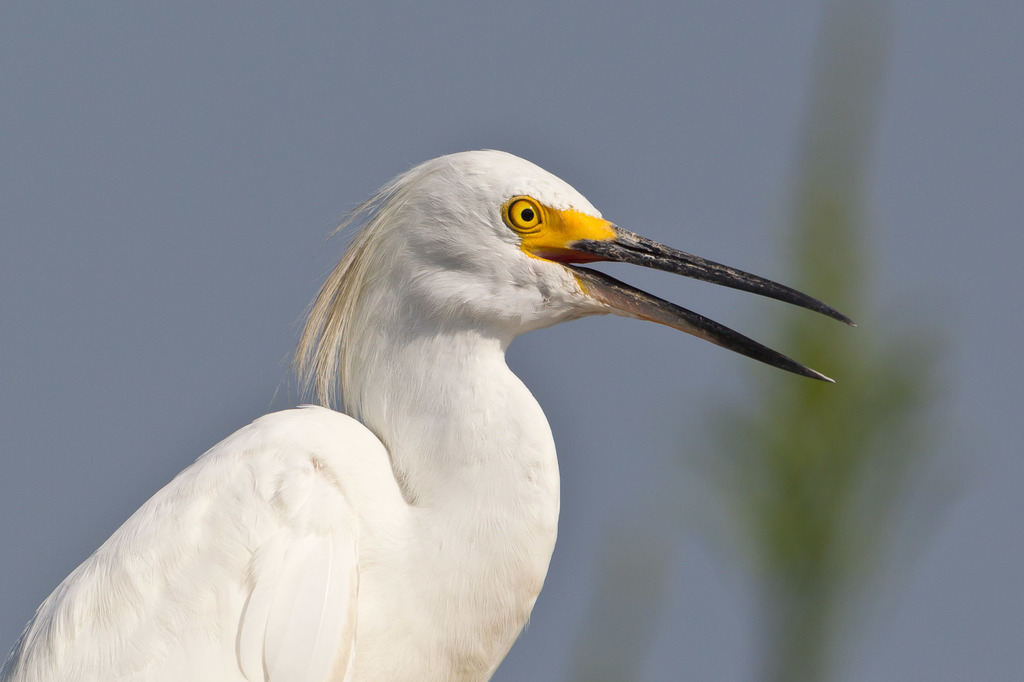
Snowy Egret
Egretta thula
Also known as: Egret
Habitat
Aquatic
Diet
Omnivore
Active Time
Diurnal
Size
371 g
About This Species
Look for this slender white heron in shallow coastal wetlands, marshes and tidal flats, where it hunts with an animated, almost dancing style, stirring the water with a bright yellow foot to flush small fish and invertebrates. Its black legs and yellow feet, sometimes called golden slippers, distinguish it from other white herons and egrets at a glance. Feeding activity peaks around low tide and in early morning or late afternoon light.
Ethical Viewing Guidelines
- Viewing from a boardwalk, vehicle or fixed hide at a distance that does not change the bird's feeding behaviour is the safest approach, since wading closer can flush an entire feeding flock and waste valuable energy.
- This species was hunted nearly to extinction for its breeding plumes in the late 1800s, which led directly to early bird protection laws in the United States; it remains protected under the Migratory Bird Treaty Act today, with additional state-level protections for nesting colonies.
- Colonial nesting sites are particularly sensitive to disturbance and are best observed only from well outside the colony boundary.
LCAvesPelecaniformesArdeidae
Seasonal Activity
4,594,126 sightings · 2000–2026
Citizen science records via GBIF
All monthsThis month
Classification
- Kingdom
- Animalia
- Phylum
- Chordata
- Class
- Aves
- Order
- Pelecaniformes
- Family
- Ardeidae
Traits
- Diet
- Omnivore
- Foraging
- Aquatic
- Activity
- Diurnal
- Body mass
- 371 g
Photo
(c) Greg Lasley, some rights reserved (CC BY-NC), uploaded by Greg Lasley
CC-BY-NC-4.0
Occurrence data from GBIF.