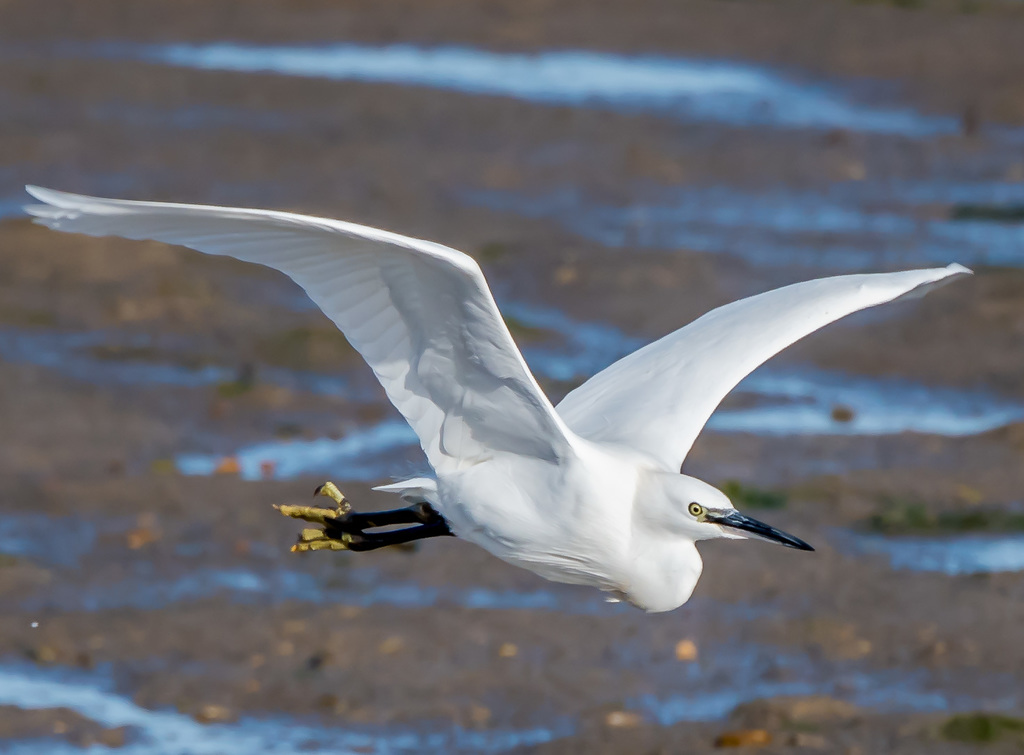
Little Egret
Egretta garzetta
Also known as: Chota Bok, Martinet Blanc
Habitat
Aquatic
Diet
Invertebrate
Active Time
Diurnal
Size
312 g
About This Species
Look for a slender white heron wading in shallow water, salt marsh, or estuary mud, often shuffling its bright yellow feet to stir up small fish and invertebrates. It is highly active and visually distinctive, frequently seen alone or in loose groups at low tide or around dawn and dusk when prey is most accessible. Coastal lagoons, tidal flats, and freshwater marshes across its wide range offer the best views, especially outside the breeding season when birds disperse to feed.
Ethical Viewing Guidelines
- Stay at least 20-30 metres back or view from a hide, since it flushes easily from open shorelines and repeated disturbance can interrupt feeding that is essential to its energy budget.
- Legal protections differ significantly across its range spanning Europe, Africa, Asia, and Australia, so check destination-specific wildlife law rather than assuming one country's rule applies elsewhere.
- Avoid approaching breeding colonies, which are often in sensitive coastal or wetland habitat where trampling and noise can cause colony-wide desertion.
Seasonal Activity
3,615,198 sightings · 2000–2026
Citizen science records via GBIF
Classification
- Kingdom
- Animalia
- Phylum
- Chordata
- Class
- Aves
- Order
- Pelecaniformes
- Family
- Ardeidae
Traits
- Diet
- Invertebrate
- Foraging
- Aquatic
- Activity
- Diurnal
- Body mass
- 312 g
Photo
(c) Andy Gooden, some rights reserved (CC BY-NC), uploaded by Andy Gooden
CC-BY-NC-4.0
Occurrence data from GBIF.