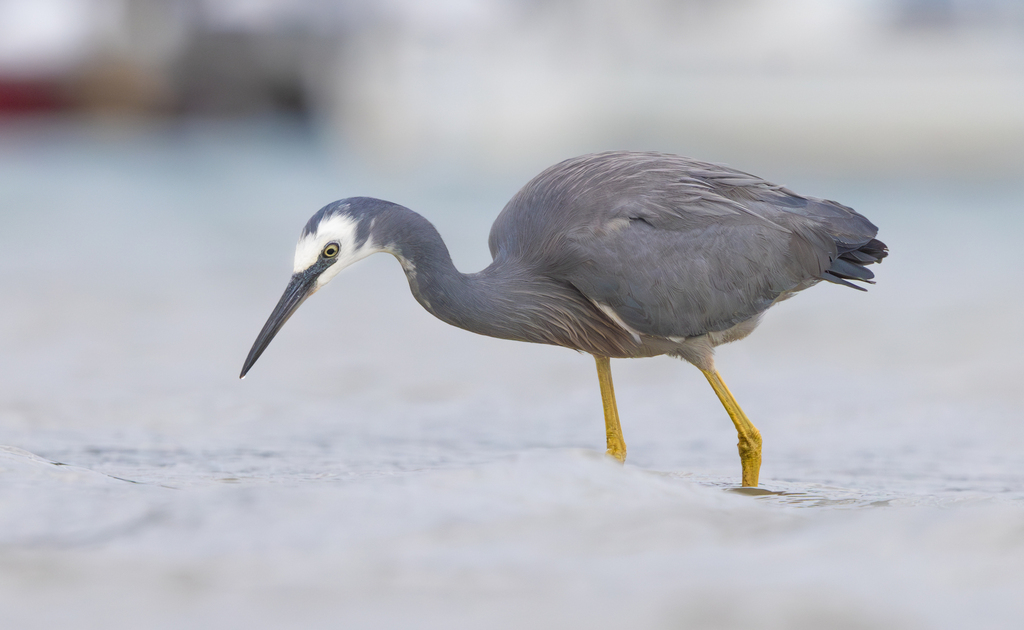
White-Faced Heron
Egretta novaehollandiae
Also known as: White-Faced Egret
About This Species
A slender, pale grey heron common around wetlands, coastlines, farmland and even urban waterways across Australia and New Zealand, typically seen stalking slowly through shallow water while foraging for fish, insects and small aquatic prey. Its methodical, high-stepping hunting style makes it easy to watch for extended periods without it appearing bothered by a quiet observer at a respectful distance. It is present year-round and can be reliably found at almost any wetland, with low tide or receding water levels often the most productive time to see active feeding.
Ethical Viewing Guidelines
- A calm, unhurried approach along a shoreline or path is generally well tolerated, but sudden movement or close crowding can cause it to abandon a feeding spot or nesting colony.
- Both Australia and New Zealand protect native herons under wildlife legislation, with nest disturbance treated as an offence, so breeding colonies in trees or reedbeds should be viewed from a distance rather than entered.
- Avoid approaching nesting colonies by boat, since these birds often nest colonially and a single disturbance can flush many pairs at once, exposing eggs and chicks to predators.
Seasonal Activity
897,225 sightings · 2000–2026
Citizen science records via GBIF
Classification
- Kingdom
- Animalia
- Phylum
- Chordata
- Class
- Aves
- Order
- Pelecaniformes
- Family
- Ardeidae
Photo
(c) Caiden B, some rights reserved (CC BY-NC), uploaded by Caiden B
CC-BY-NC-4.0
Occurrence data from GBIF.