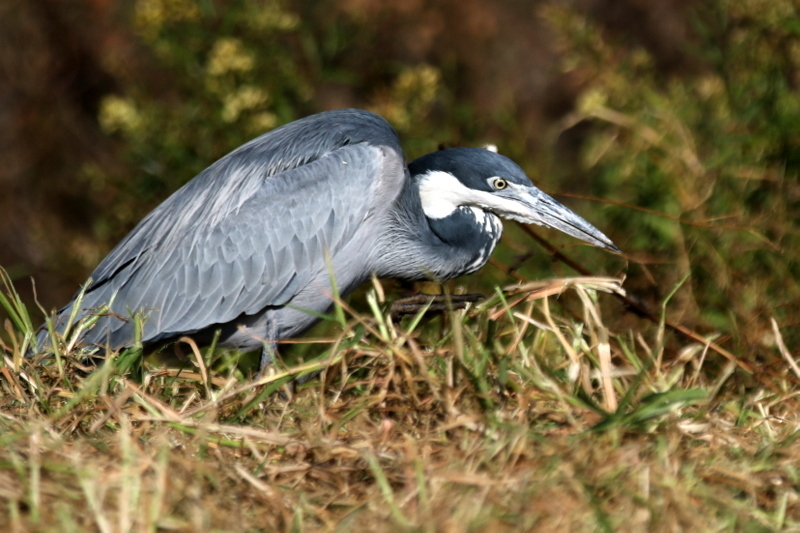
Black-Headed Heron
Ardea melanocephala
Habitat
Aquatic
Diet
VertFishScav
Active Time
Diurnal
Size
1.1 kg
About This Species
Look for a tall grey-and-black wading bird standing motionless at the edge of lakes, marshes, rivers, or damp grassland across sub-Saharan Africa, often hunting alone rather than in groups. It strikes suddenly at fish, frogs, and small rodents, and is most active around dawn and dusk. Wetlands and floodplains during the drier months, when water levels concentrate prey, offer the best sightings.
Ethical Viewing Guidelines
- Stay well back from nesting colonies and feeding birds, ideally 30 metres or more, since a startled heron abandons a hunting spot and burns energy it needs.
- Protections for wetland birds vary by country across its African range, from strict reserve rules to little formal enforcement, so treat any wetland as sensitive and avoid approaching on foot at the water's edge.
- Watch with binoculars from cover rather than trying to get closer for a photograph.
LCAvesPelecaniformesArdeidae
Seasonal Activity
282,312 sightings · 2000–2026
Citizen science records via GBIF
All monthsThis month
Classification
- Kingdom
- Animalia
- Phylum
- Chordata
- Class
- Aves
- Order
- Pelecaniformes
- Family
- Ardeidae
Traits
- Diet
- VertFishScav
- Foraging
- Aquatic
- Activity
- Diurnal
- Body mass
- 1.1 kg
Photo
(c) fayne, some rights reserved (CC BY-NC), uploaded by fayne
CC-BY-NC-4.0
Occurrence data from GBIF.