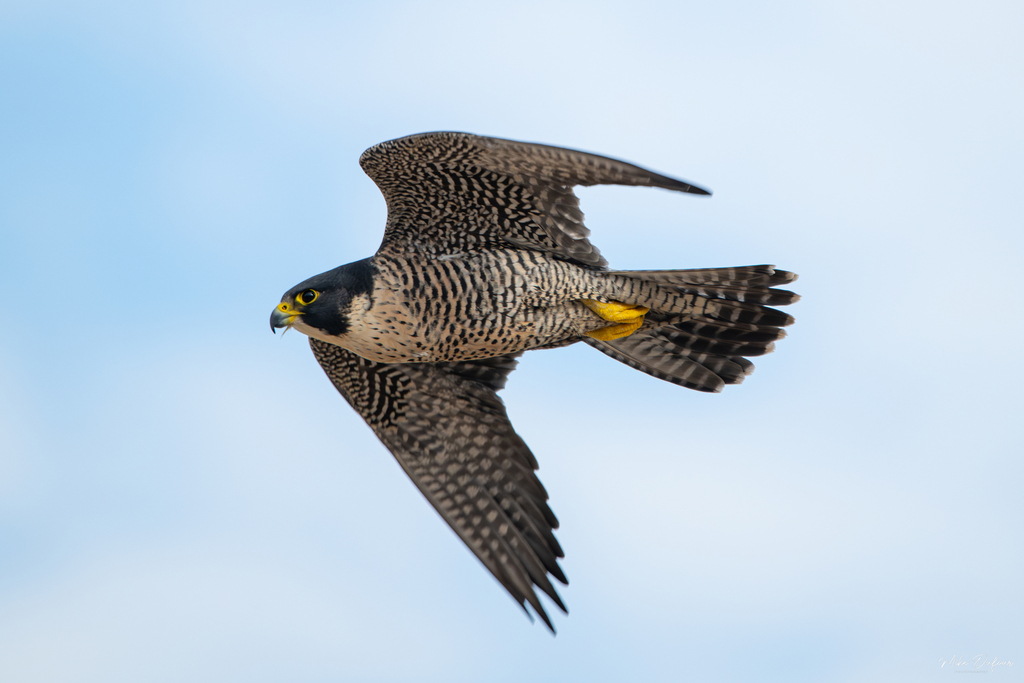
Peregrine Falcon
Falco peregrinus
Also known as: Peregrine, Duck Hawk
Habitat
Ground
Diet
VertFishScav
Active Time
Diurnal
Size
760 g
About This Species
Scan cliffs, tall buildings and bridges, where this falcon nests on ledges and can be seen perched watching for prey below. Its signature hunt is a near-vertical stoop onto pigeons or other birds in flight, reaching remarkable speed and often ending in a puff of feathers. Breeding season through late spring and summer is the most reliable time to watch adults provisioning a nest, while urban populations can be watched year-round at dusk and dawn.
Ethical Viewing Guidelines
- Keep well back from nesting cliffs or ledges, ideally 100 metres or more, and use a scope rather than approaching for a closer look, since many populations are protected under specific nest-disturbance laws that make close approach during breeding a legal offence in the UK and several other countries.
- Where rules differ across its very wide range, follow the most cautious local guidance rather than assuming one country's protections apply elsewhere.
- Avoid loud noise, flash photography or lingering near a nest site, all of which can cause adults to abandon eggs or chicks.
LCAvesFalconiformesFalconidae
Seasonal Activity
2,635,489 sightings · 2000–2026
Citizen science records via GBIF
All monthsThis month
Classification
- Kingdom
- Animalia
- Phylum
- Chordata
- Class
- Aves
- Order
- Falconiformes
- Family
- Falconidae
Traits
- Diet
- VertFishScav
- Foraging
- Ground
- Activity
- Diurnal
- Body mass
- 760 g
Photo
(c) Mike Dufour, some rights reserved (CC BY-NC), uploaded by Mike Dufour
CC-BY-NC-4.0
Occurrence data from GBIF.