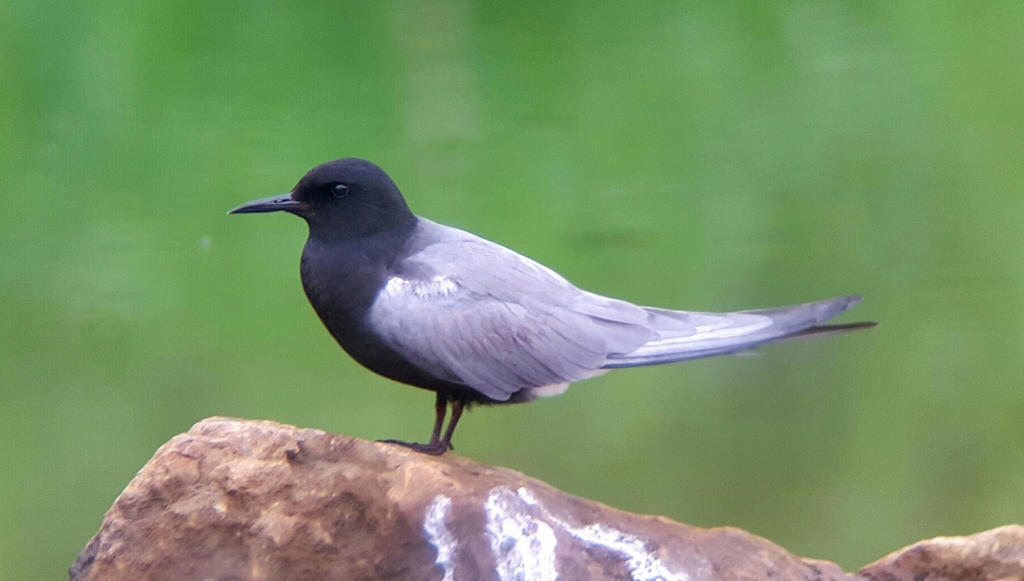
Black Tern
Chlidonias niger
Habitat
Aquatic
Diet
VertFishScav
Active Time
Diurnal
Size
65 g
About This Species
Look for buoyant, tern-like flight low over marshes, lakes and lagoons, with frequent dips to the surface to snatch insects and small fish rather than plunge-diving. Breeding birds favour freshwater marshes with dense emergent vegetation, while migrants gather in loose flocks over coastal wetlands. Late spring through summer is best for breeding activity, with passage birds moving through in spring and autumn.
Ethical Viewing Guidelines
- Give nesting colonies a wide berth, since flushed adults leave eggs and chicks exposed to predators and weather.
- Wild bird protections covering nesting waterbirds exist across much of this species' Eurasian and North American range, though the specifics vary by country, so check local regulations rather than assuming one set of rules.
- Watch from a distance with binoculars or a scope and avoid entering marsh vegetation during the breeding season.
LCAvesCharadriiformesLaridae
Seasonal Activity
705,901 sightings · 2000–2026
Citizen science records via GBIF
All monthsThis month
Classification
- Kingdom
- Animalia
- Phylum
- Chordata
- Class
- Aves
- Order
- Charadriiformes
- Family
- Laridae
Traits
- Diet
- VertFishScav
- Foraging
- Aquatic
- Activity
- Diurnal
- Body mass
- 65 g
Photo
(c) David Yeany, some rights reserved (CC BY-NC), uploaded by David Yeany
CC-BY-NC-4.0
Occurrence data from GBIF.