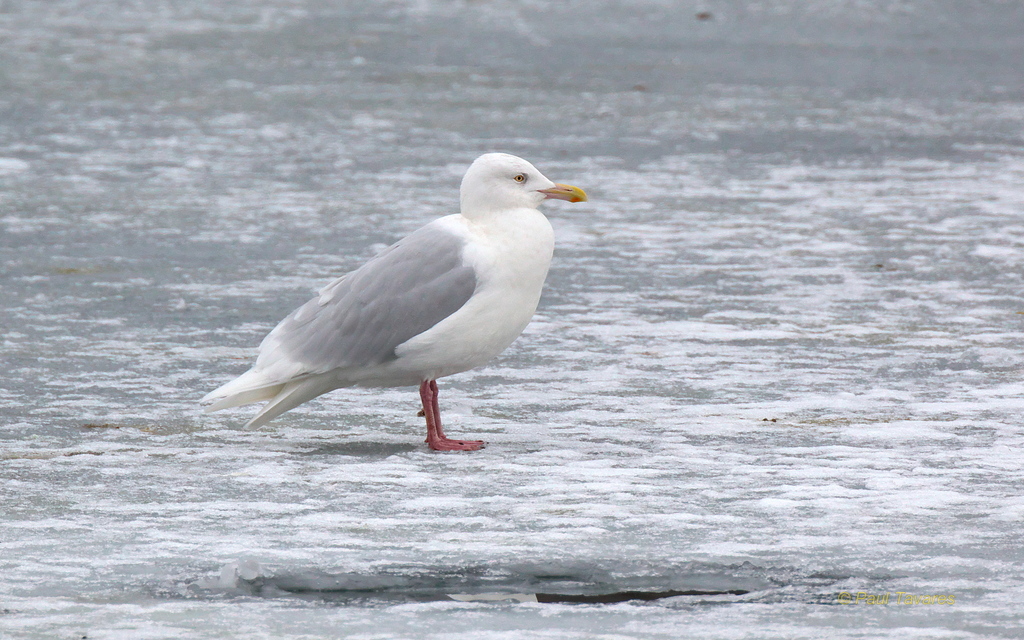
Glaucous Gull
Larus hyperboreus
Habitat
Aquatic
Diet
VertFishScav
Active Time
Diurnal
Size
1.5 kg
About This Species
The largest white-winged gull in the Northern Hemisphere, this Arctic breeder winters along coastlines, harbours, and fishing ports well south of its breeding range, where it scavenges around boats and refuse. Look for its pale, unmarked wingtips, lacking the black seen on most other large gulls, as the clearest field mark at rest or in flight. Winter is by far the best season to see it, when birds concentrate around harbours, landfills, and fish-processing areas well outside the high Arctic.
Ethical Viewing Guidelines
- This is a large, generally confident gull around harbours and boats, and ordinary viewing distances of several metres are enough without needing to approach closely.
- Avoid deliberately luring or feeding it at close range, which encourages unnaturally bold behaviour around people and boats.
- Wild bird protections apply across the northern countries where it winters, though the specific rules on feeding and disturbance vary by country, so following posted local guidance at any harbour or reserve is the safest approach.
LCAvesCharadriiformesLaridae
Seasonal Activity
344,137 sightings · 2000–2026
Citizen science records via GBIF
All monthsThis month
Classification
- Kingdom
- Animalia
- Phylum
- Chordata
- Class
- Aves
- Order
- Charadriiformes
- Family
- Laridae
Traits
- Diet
- VertFishScav
- Foraging
- Aquatic
- Activity
- Diurnal
- Body mass
- 1.5 kg
Photo
(c) Paul Tavares, some rights reserved (CC BY-NC), uploaded by Paul Tavares
CC-BY-NC-4.0
Occurrence data from GBIF.