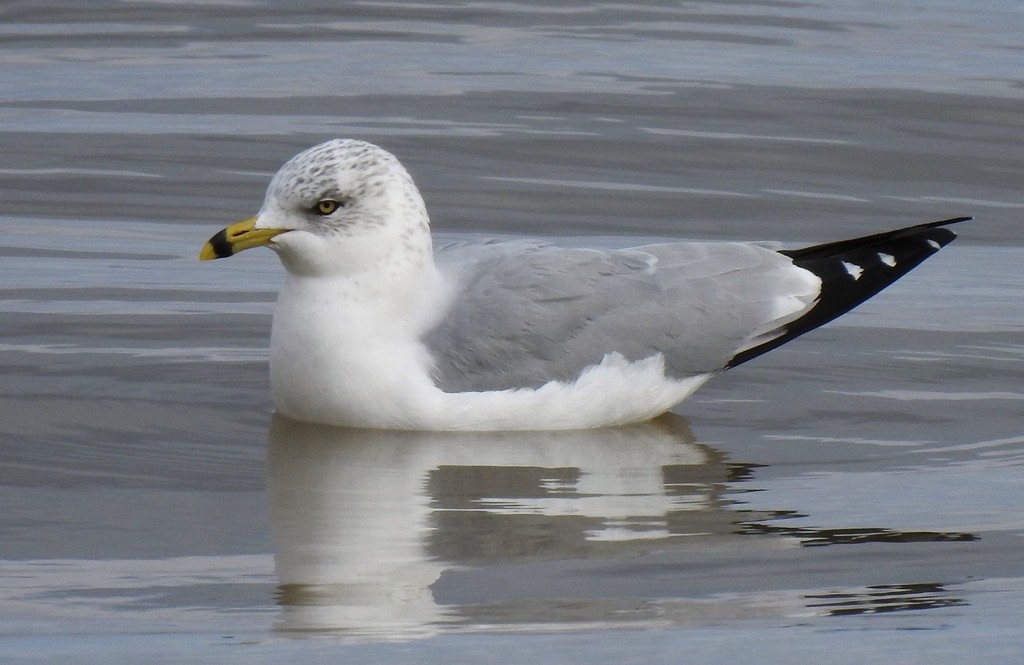
Ring-Billed Gull
Larus delawarensis
Habitat
Ground
Diet
VertFishScav
Active Time
Diurnal
Size
516 g
About This Species
Look for this gull anywhere near water or open ground with people around: parking lots, beaches, landfills, playing fields, and boat harbours all draw it in numbers. The yellow legs and black ring near the tip of the bill separate it from similar gulls at rest or in flight, and it is bold enough to approach picnicking humans directly. It is present year-round across much of its range, though numbers swell inland in winter as birds move away from the Great Lakes and coasts.
Ethical Viewing Guidelines
- These gulls are used to people and often approach on their own, so the main discipline is not feeding them, since habituation to handouts leads to aggressive behaviour around food and can concentrate birds in ways that spread disease.
- Keep a normal walking distance and avoid deliberately luring birds closer with food.
- Nesting colonies are more sensitive than foraging birds and are protected under migratory bird laws in the US and Canada, so give any colony area a wide, quiet berth during the breeding season.
LCAvesCharadriiformesLaridae
Seasonal Activity
10,736,022 sightings · 2000–2026
Citizen science records via GBIF
All monthsThis month
Classification
- Kingdom
- Animalia
- Phylum
- Chordata
- Class
- Aves
- Order
- Charadriiformes
- Family
- Laridae
Traits
- Diet
- VertFishScav
- Foraging
- Ground
- Activity
- Diurnal
- Body mass
- 516 g
Photo
(c) Joanne Muis Redwood, some rights reserved (CC BY-NC), uploaded by Joanne Muis Redwood
CC-BY-NC-4.0
Occurrence data from GBIF.