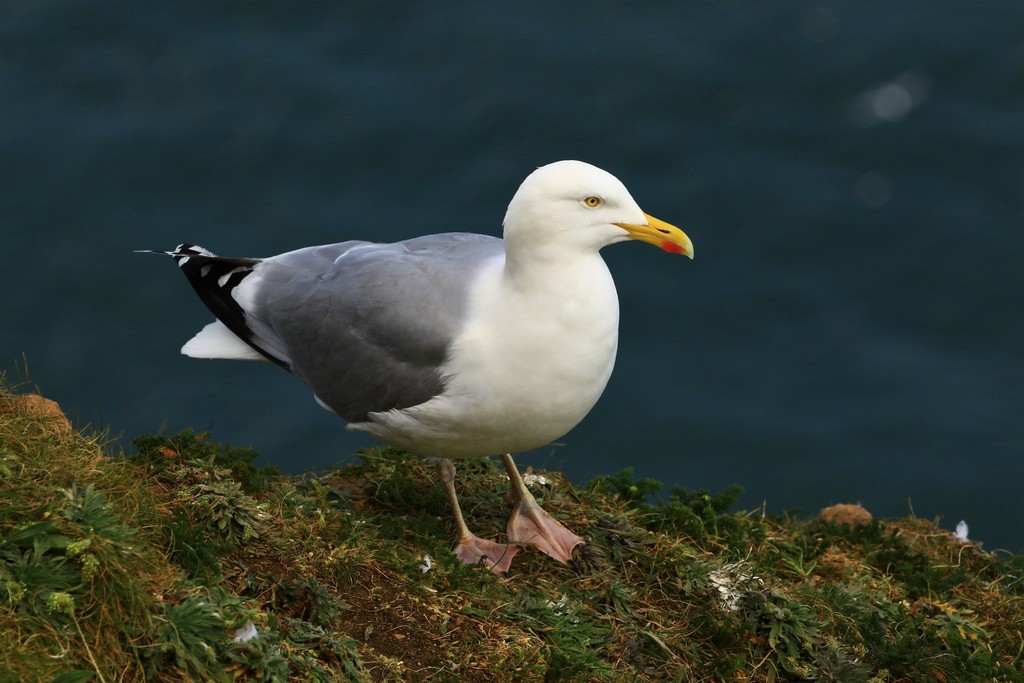
Herring Gull
Larus argentatus
Also known as: European Herring Gull
Habitat
Aquatic
Diet
VertFishScav
Active Time
Diurnal
Size
1.1 kg
About This Species
A familiar large gull of coasts, harbours, rubbish tips and inland towns, recognisable by its pale grey back, pink legs and yellow bill with a red spot. It is a noisy, opportunistic feeder, scavenging, following boats and fishing along shorelines, and its loud laughing call carries well over water. Numbers are highest at coastal roosts and cliffs in the breeding season, with birds also common inland and around urban areas year-round.
Ethical Viewing Guidelines
- Give nesting colonies a wide berth, especially on cliffs or rooftops, since adults will dive-bomb intruders that stray too close to chicks, and disturbing breeding birds is restricted under wildlife protection law in the UK and much of Europe.
- Keep at least several metres back and never feed gulls deliberately, as habituation to humans increases conflict and risk to both people and birds.
- Rules on nest disturbance vary by country, so treat any occupied colony with caution rather than assuming a fixed safe distance applies everywhere.
LCAvesCharadriiformesLaridae
Seasonal Activity
5,894,465 sightings · 2000–2026
Citizen science records via GBIF
All monthsThis month
Classification
- Kingdom
- Animalia
- Phylum
- Chordata
- Class
- Aves
- Order
- Charadriiformes
- Family
- Laridae
Traits
- Diet
- VertFishScav
- Foraging
- Aquatic
- Activity
- Diurnal
- Body mass
- 1.1 kg
Photo
(c) Andrew Thompson, some rights reserved (CC BY-NC), uploaded by Andrew Thompson
CC-BY-NC-4.0
Occurrence data from GBIF.