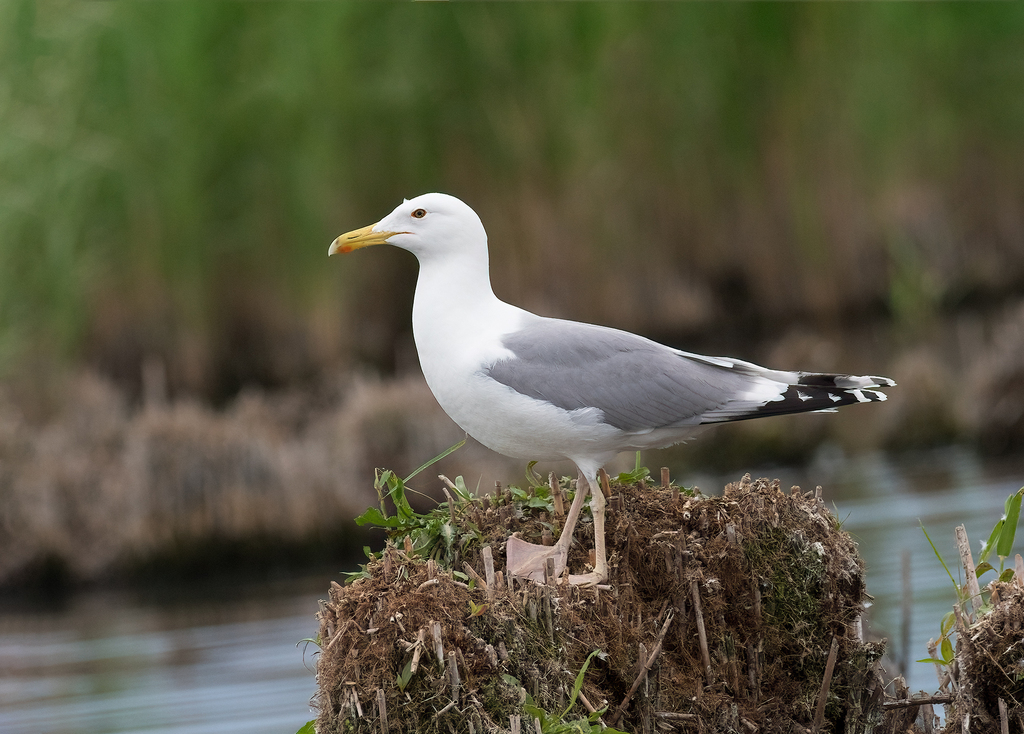
Caspian Gull
Larus cachinnans
Also known as: Pontic Gull
Habitat
Aquatic
Diet
VertFishScav
Active Time
Diurnal
Size
1.1 kg
About This Species
Look for a large, long-legged, long-billed gull with a notably small-headed profile among mixed gull flocks at reservoirs, coastal sites, landfills and river mouths, mainly from autumn through winter when birds from eastern Europe and central Asia move west. Adults show a pale grey mantle and dark eye, while immatures require care to separate from similar large white-headed gulls. Scanning roosting or loafing flocks at low tide or dusk gives the best chance of a clear, static view.
Ethical Viewing Guidelines
- Large gull flocks tolerate moderate distances well, so there is rarely a need to approach closer than normal birdwatching distance to get a good look, and doing so simply scatters the whole roost.
- Protections for gulls differ between countries within its wintering range, so it is worth checking local rules before assuming any particular legal status.
- Watching from a vehicle or fixed hide and letting the flock settle typically produces better views than walking toward it.
Seasonal Activity
318,286 sightings · 2000–2026
Citizen science records via GBIF
Classification
- Kingdom
- Animalia
- Phylum
- Chordata
- Class
- Aves
- Order
- Charadriiformes
- Family
- Laridae
Traits
- Diet
- VertFishScav
- Foraging
- Aquatic
- Activity
- Diurnal
- Body mass
- 1.1 kg
Photo
(c) Геннадий, some rights reserved (CC BY-NC), uploaded by Геннадий
CC-BY-NC-4.0
Occurrence data from GBIF.