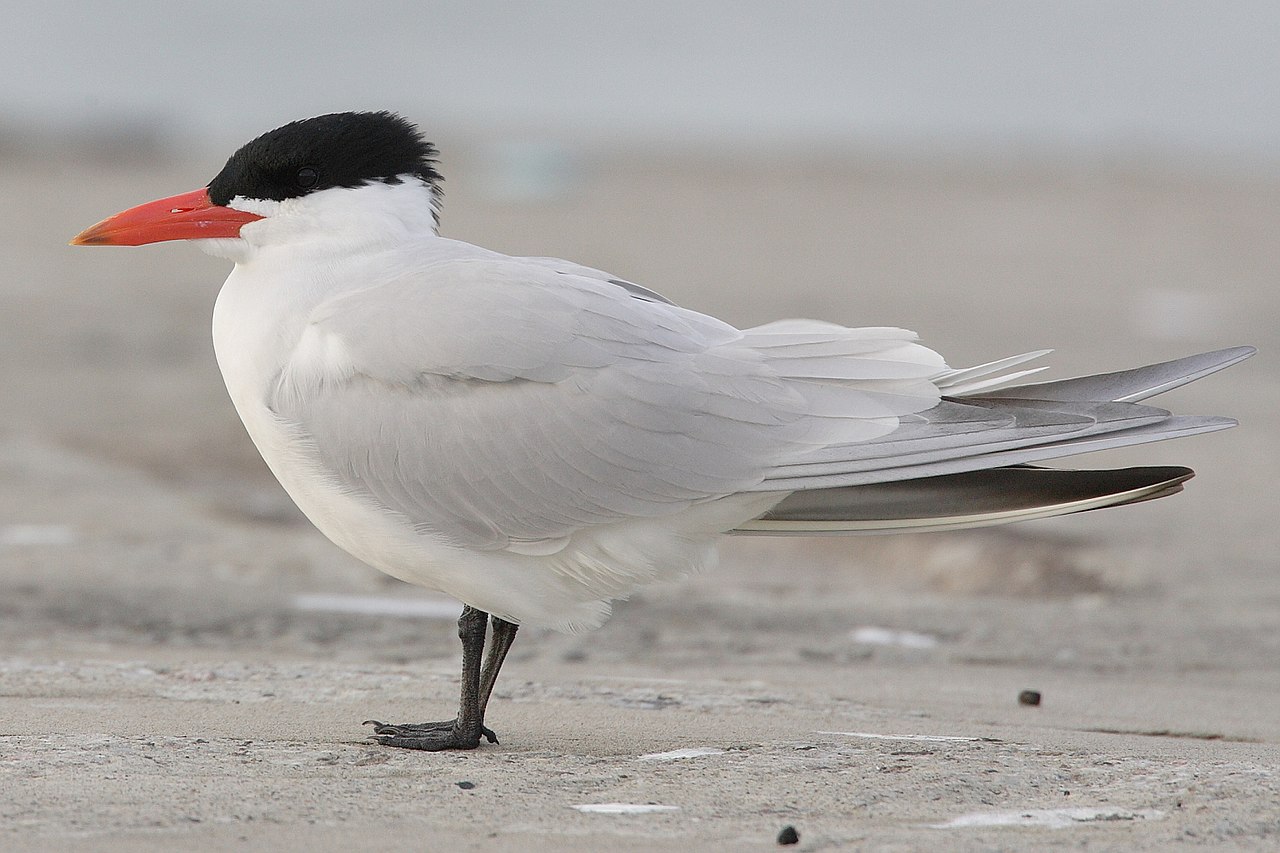
Caspian Tern
Hydroprogne caspia
About This Species
Watch for this large, harsh-calling tern patrolling coastal waters, estuaries and large lakes, plunge-diving from height for fish. It nests colonially on bare sand or gravel islands, and is most conspicuous during the breeding season when adults commute steadily between the colony and feeding grounds. A telescope or long lens along an estuary shoreline at low tide often gives good views as birds pass overhead.
Ethical Viewing Guidelines
- Keep well back from any nesting colony, ideally 100 metres or more, since terns will abandon eggs or chicks if repeatedly flushed and exposed young are quickly taken by gulls and predators.
- Colonial waterbirds are protected in most of this species' range, and disturbing breeding colonies can be a legal offence, so approach on foot only where signage or local guidance permits it.
- Viewing from a vehicle, hide, or a distance with optics disturbs the colony far less than walking toward it.
LCAvesCharadriiformesLaridae
Seasonal Activity
2,316,354 sightings · 2000–2026
Citizen science records via GBIF
All monthsThis month
Classification
- Kingdom
- Animalia
- Phylum
- Chordata
- Class
- Aves
- Order
- Charadriiformes
- Family
- Laridae
Photo
Wikimedia Commons / Wikimedia Commons
CC-BY-SA-4.0
Occurrence data from GBIF.