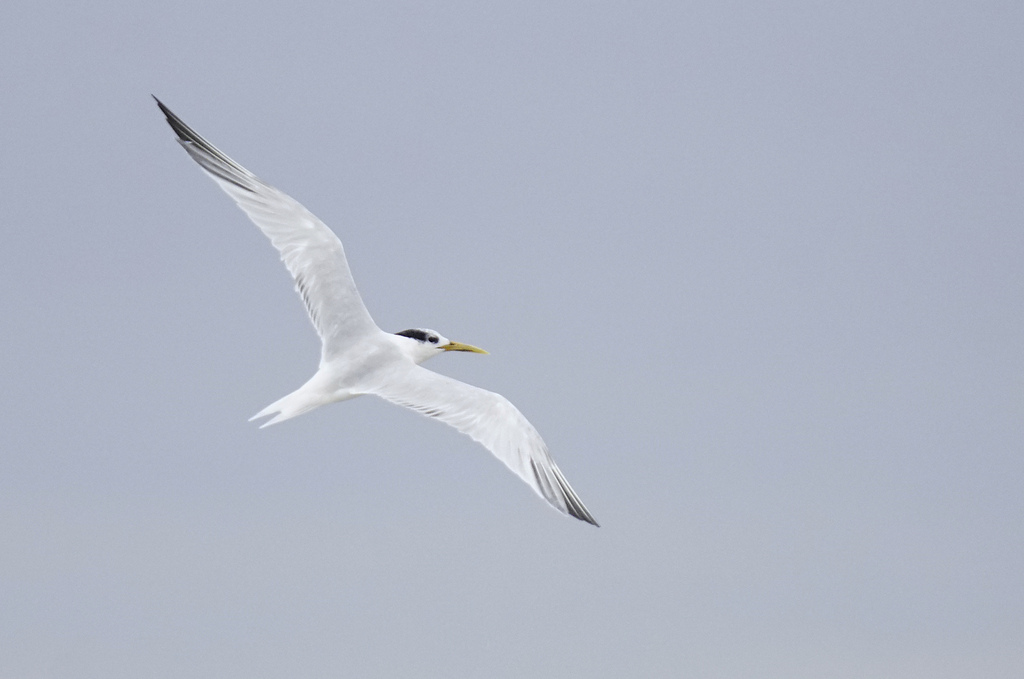
Sandwich Tern
Thalasseus sandvicensis
About This Species
Look for a slim, crested tern hovering high over estuary mouths and open coast before plunging steeply for small fish, its black cap and shaggy nape a good field mark against paler gulls and terns nearby. Breeding colonies form on sandy or shingle spits and islands from late spring through summer, and the sharp, grating call often gives birds away before you spot them. Coastal headlands and harbour approaches at low tide are reliable spots to watch feeding groups.
Ethical Viewing Guidelines
- Give nesting colonies a wide berth, ideally 100 metres or more, since terns will mob or abandon nests if disturbed, and eggs and chicks are camouflaged and easily trodden on underfoot.
- Many breeding sites sit within protected reserves where seasonal access restrictions apply and disturbing nesting birds is an offence under wildlife protection law in the UK and much of Europe; rules and enforcement vary elsewhere in its range, so check local signage.
- Stay on marked paths, keep dogs leashed near colonies, and view from a distance with binoculars rather than approaching.
LCAvesCharadriiformesLaridae
Seasonal Activity
1,142,287 sightings · 2000–2026
Citizen science records via GBIF
All monthsThis month
Classification
- Kingdom
- Animalia
- Phylum
- Chordata
- Class
- Aves
- Order
- Charadriiformes
- Family
- Laridae
Photo
(c) Adrian Antunez, some rights reserved (CC BY-NC), uploaded by Adrian Antunez
CC-BY-NC-4.0
Occurrence data from GBIF.