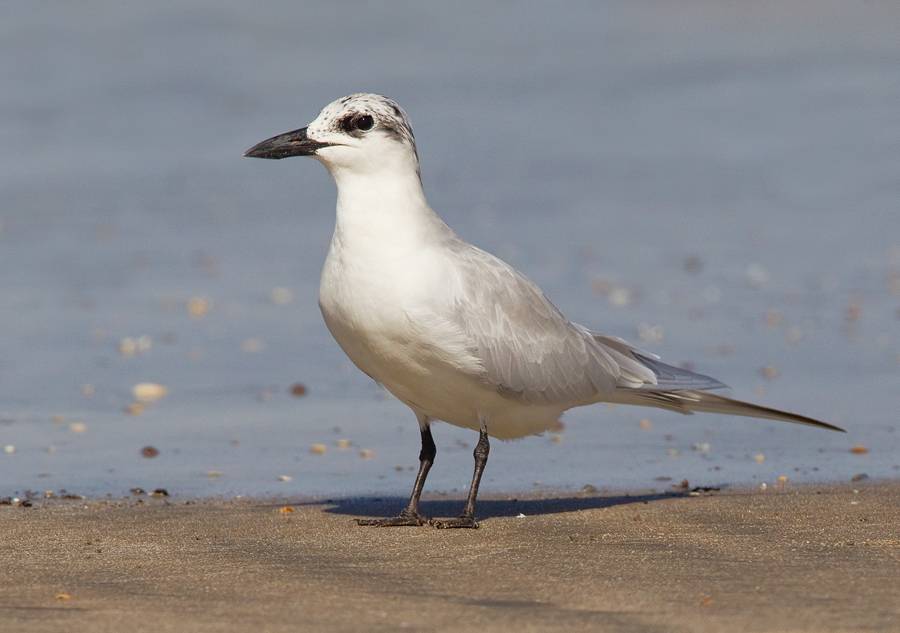
Gull-Billed Tern
Gelochelidon nilotica
Also known as: Common Gull-Billed Tern
About This Species
Look for this pale, stocky tern hawking low over wetlands, grasslands, and coastal lagoons, where it often forages away from open water, taking insects and small vertebrates on the wing or from the ground rather than plunge-diving like many terns. Its short, heavy black bill is a useful field mark distinguishing it from similar terns. Breeding colonies are most active in the warmer months, when birds gather at traditional sites on sandbars, islands, and salt marsh.
Ethical Viewing Guidelines
- Stay at least 50-100 metres from breeding colonies, as terns are colonial nesters highly prone to mass flushing, which exposes eggs and chicks to sun, predators, and cold within minutes.
- Many colony sites sit within protected wetland or coastal reserves where seasonal closures apply, and disturbing nesting terns is an offence under wildlife protection law in numerous countries this species breeds in, though the specific rules differ by jurisdiction.
- If a colony flushes as a group when you are still some distance away, retreat immediately rather than continuing forward.
LCAvesCharadriiformesLaridae
Seasonal Activity
379,853 sightings · 2000–2026
Citizen science records via GBIF
All monthsThis month
Classification
- Kingdom
- Animalia
- Phylum
- Chordata
- Class
- Aves
- Order
- Charadriiformes
- Family
- Laridae
Photo
(c) Paul Cools, some rights reserved (CC BY-NC), uploaded by Paul Cools
CC-BY-NC-4.0
Occurrence data from GBIF.