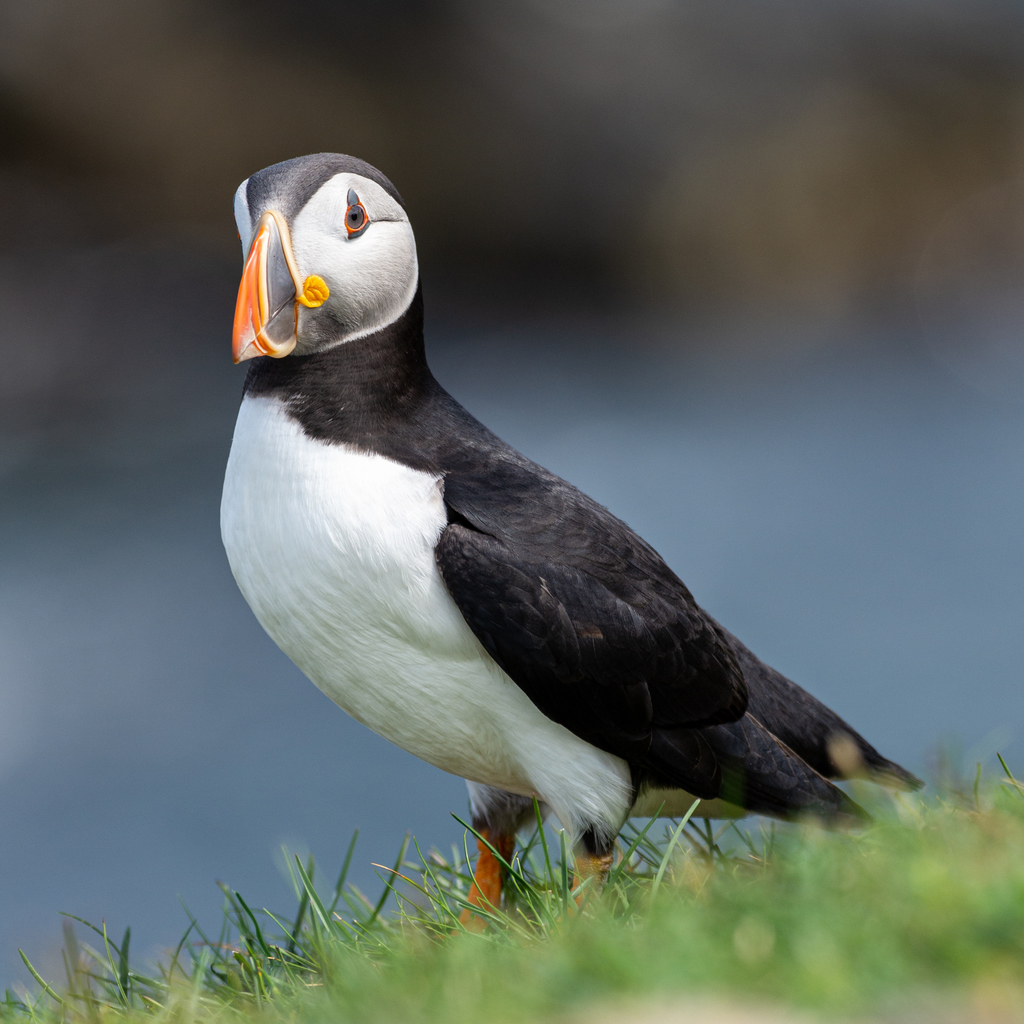
Atlantic Puffin
Fratercula arctica
Also known as: Puffin, Southern Puffin
Habitat
Aquatic
Diet
VertFishScav
Active Time
Diurnal
Size
593 g
About This Species
Look for compact, upright seabirds perched on clifftop ledges or wheeling in low, rapid wingbeats just above the wave surface near rocky Atlantic coastlines and offshore islands, where large breeding colonies form from April through August. The distinctive deep, growling purr of territorial birds carries from burrow entrances, and the vivid orange-red bill is most conspicuous during the breeding season, making visual identification straightforward at close range. Visit established colony sites — such as those in Iceland, the Faroe Islands, or the Outer Hebrides — at dawn and dusk during June and July, when birds make frequent inshore fish-carrying flights and congregate in large offshore rafts just before landing, offering extended viewing opportunities in good light.
Ethical Viewing Guidelines
- Maintain a minimum distance of 10–15 metres from birds on land, and avoid positioning yourself between individuals and their burrow entrances, as repeated flushing from nesting sites can cause chick abandonment.
- In the UK, this species and its active nests are fully protected under the Wildlife and Countryside Act 1981, making intentional disturbance a criminal offence.
- Use natural cover or a hide where possible, keep groups small and quiet, and limit time spent near breeding colonies, particularly during the critical incubation and chick-rearing period from April to August.
Seasonal Activity
159,235 sightings · 2000–2026
Citizen science records via GBIF
Classification
- Kingdom
- Animalia
- Phylum
- Chordata
- Class
- Aves
- Order
- Charadriiformes
- Family
- Alcidae
Traits
- Diet
- VertFishScav
- Foraging
- Aquatic
- Activity
- Diurnal
- Body mass
- 593 g
Photo
(c) Jackson W.F. Chu, some rights reserved (CC BY-NC-SA), uploaded by Jackson W.F. Chu
CC-BY-NC-SA-4.0
Occurrence data from GBIF.