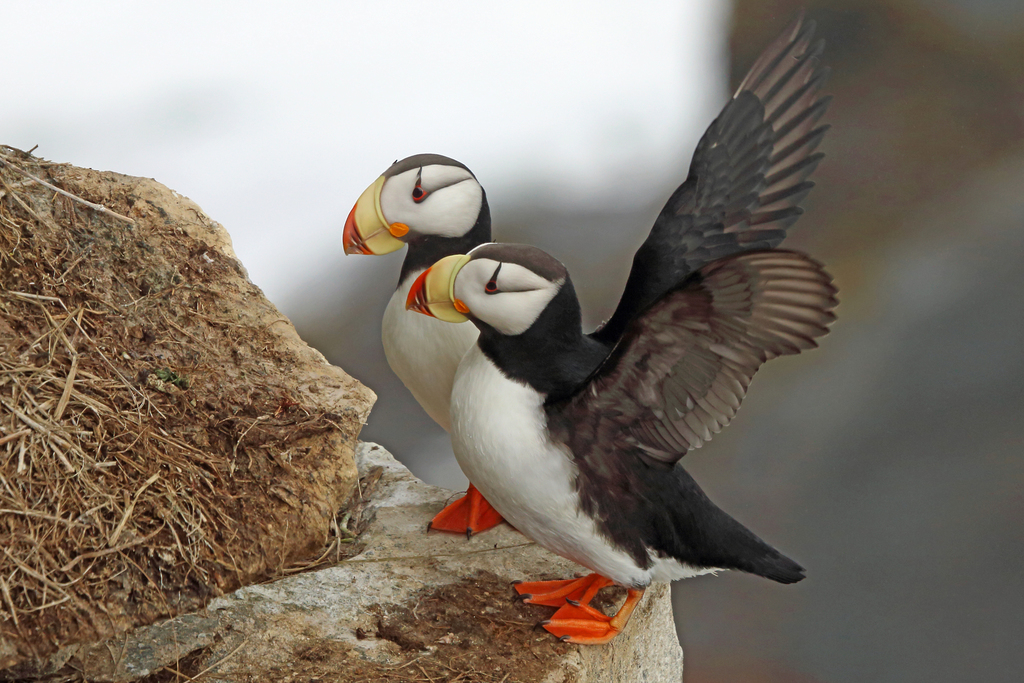
Horned Puffin
Fratercula corniculata
Also known as: Large-Billed Puffin
About This Species
A stocky seabird of rocky North Pacific coastlines, it nests colonially on sea cliffs and offshore islands, spending most of the year far out at sea where it dives for fish and invertebrates. In breeding plumage, watch for the vivid orange-red bill, chalk-white face, and the distinctive fleshy horn above each eye, which give this bird an almost comically stern expression; listen at colonies for low, growling calls emanating from burrow entrances and crevices. The best viewing window runs from late May through early August at established breeding colonies in Alaska and the Russian Far East, where calm mornings offer ideal conditions to observe birds launching from cliffs, loafing on ledges, and returning with bill-loads of fish for their chicks.
Ethical Viewing Guidelines
- Maintain a minimum distance of 50 metres from nesting colonies, and use a spotting scope or telephoto lens to observe birds without encroaching on their space, as close approach during the breeding season can cause nest abandonment and increased predation risk.
- In the United States, this species is protected under the Migratory Bird Treaty Act, which prohibits disturbance, pursuit, or take, while in Russia and across its broader Pacific range, equivalent national wildlife protections apply at key breeding sites such as designated nature reserves and zapovedniki.
- Approach colonies quietly and from downwind, limit time spent near active sites, avoid flushing birds from burrows, and give way immediately if birds show signs of agitation such as alarm calling or repeated flight from the nest entrance.
Seasonal Activity
35,537 sightings · 2000–2026
Citizen science records via GBIF
Classification
- Kingdom
- Animalia
- Phylum
- Chordata
- Class
- Aves
- Order
- Charadriiformes
- Family
- Alcidae
Photo
(c) Nigel Voaden, some rights reserved (CC BY)
CC-BY-4.0
Occurrence data from GBIF.