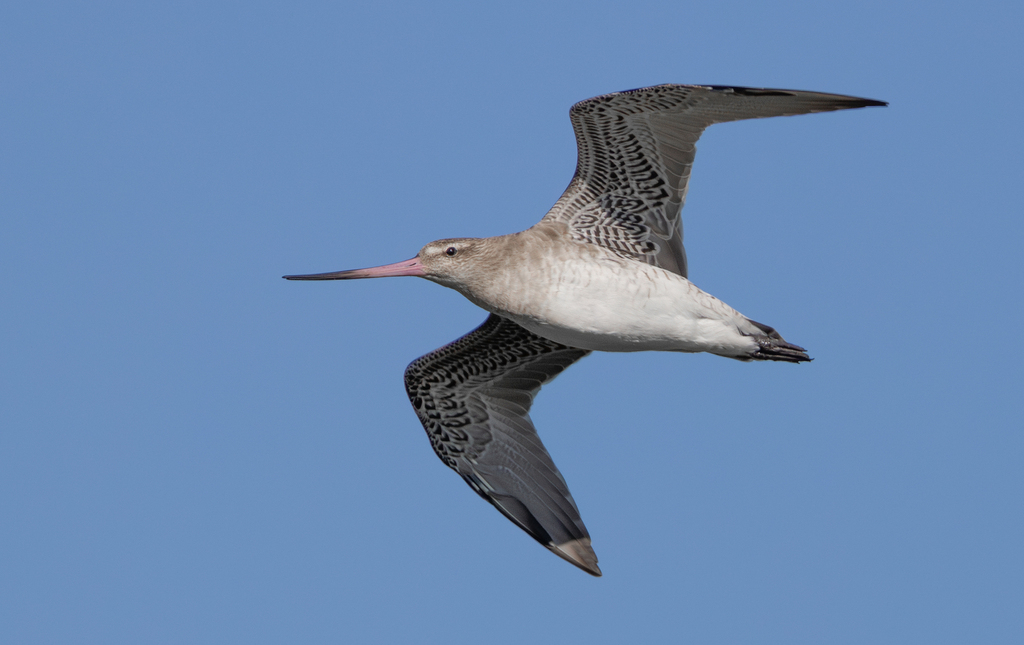
Bar-Tailed Godwit
Limosa lapponica
Habitat
Aquatic
Diet
Invertebrate
Active Time
Diurnal
Size
292 g
About This Species
A long-billed migratory shorebird, it probes soft mud and sand at the tideline for worms and molluscs, typically in loose flocks on estuaries, mudflats and coastal lagoons. The best viewing is during migration staging periods and over winter, when large numbers gather to feed on falling tides, and a rising tide often pushes flocks into tight, visible roosts. Look for a long, slightly upturned bill and, in breeding plumage, a rich rufous wash on the underparts.
Ethical Viewing Guidelines
- Keep well back from feeding and roosting flocks, ideally 50 metres or more, and avoid flushing them, since repeated disturbance during migration stopovers can cost birds critical fat reserves needed to complete long flights.
- As a Near Threatened species with legal protection under migratory bird agreements in many countries along its flyway, disturbance at key staging sites can carry legal consequences as well as ecological ones.
- Stick to marked paths or hides where provided rather than walking out onto mudflats.
NTAvesCharadriiformesScolopacidae
Seasonal Activity
761,853 sightings · 2000–2026
Citizen science records via GBIF
All monthsThis month
Classification
- Kingdom
- Animalia
- Phylum
- Chordata
- Class
- Aves
- Order
- Charadriiformes
- Family
- Scolopacidae
Traits
- Diet
- Invertebrate
- Foraging
- Aquatic
- Activity
- Diurnal
- Body mass
- 292 g
Photo
(c) Caiden B, some rights reserved (CC BY-NC), uploaded by Caiden B
CC-BY-NC-4.0
Occurrence data from GBIF.